
Choosing a sofa for a small living room is less about finding the smallest couch and more about finding the right balance between size, comfort, layout, and style.
A sofa can quickly become the largest piece of furniture in the room. If it is too deep, too wide, or visually bulky, it can make an already compact space feel crowded. On the other hand, choosing something extremely small may leave you with uncomfortable seating and wasted floor space.
The best sofa for a small living room should fit the available area without making everyday movement difficult. It should also provide enough seating for the people who use the room and complement the furniture you already own.
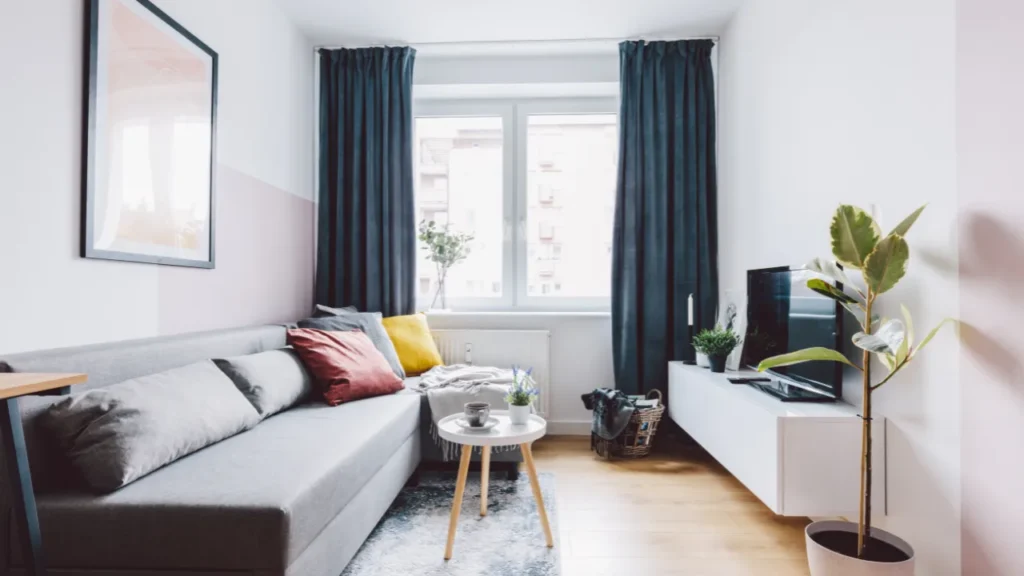
From apartment-size sofas and loveseats to compact sectionals and sleeper sofas, there are several good options for small spaces. The key is knowing what to measure and which features actually matter.
What Makes a Sofa Good for a Small Living Room?
Before choosing a particular sofa style, consider how efficiently it uses the available space.
Compact Overall Width
Sofa width is one of the first measurements to check. A sofa may look compact online but take up considerably more room once its arms and surrounding clearance are considered.
Measure the wall or area where the sofa will sit and compare that measurement with the sofa’s overall width, not just its seating width.
Also consider nearby doors, windows, tables, lamps, and walking paths.
Shallow or Moderate Seat Depth
Depth is just as important as width in a small room.
A very deep sofa can extend far into the living area, leaving less room for a coffee table or walkway. A sofa with moderate depth can provide comfortable seating while preserving more usable floor space.
However, don’t choose a shallow sofa solely because it saves space. Sit on it if possible or check the seat dimensions carefully before buying.
Raised or Exposed Legs
Sofas with visible legs can create a lighter visual appearance because more of the floor remains visible underneath.
This doesn’t physically increase the size of the room, but it can make the furniture feel less visually heavy.
Slim Arms
Bulky arms can consume surprisingly valuable space.
A sofa with slim, streamlined arms may provide a similar seating area while using less overall width than a heavily padded or rolled-arm design.
Proportional Scale
Small does not automatically mean suitable.
For example, a very short sofa with extremely thick arms may use space less efficiently than a slightly wider sofa with slim arms and a streamlined frame.
Think about the sofa as part of the entire room rather than judging its size by itself.
Best Sofa Types for Small Living Rooms
Different sofa designs work better for different layouts and lifestyles. Here are the main options worth considering.
1. Apartment-Size Sofas
Apartment-size sofas are designed with smaller rooms and tighter spaces in mind.
They can be a strong choice for:
- Apartments
- Condos
- Small houses
- Studio living areas
- Narrow living rooms
Their appeal is the balance between a traditional sofa and a very small loveseat.
Look for an apartment sofa with appropriate width and moderate depth rather than choosing solely based on the label “apartment size.”
2. Loveseats
A loveseat is often one of the easiest choices for a very small living room.
Most are designed for two people, making them suitable when seating requirements are modest.
Advantages:
- Compact footprint
- Easy to arrange
- Works well in apartments
- Leaves room for additional chairs
Limitations:
- Less seating than a standard sofa
- May not be ideal for families
- Some designs sacrifice lounging space
A loveseat can be particularly useful when you want to combine it with one or two compact accent chairs.
3. Compact Standard Sofas
You don’t necessarily need an unusually small sofa.
A carefully proportioned standard sofa can work well if its width and depth match the room.
Look for:
- Slim arms
- Moderate depth
- Streamlined cushions
- Appropriate seat height
- A frame that doesn’t visually overwhelm the room
This is often the best middle ground for households that need more seating than a loveseat provides.
4. Small Sectional Sofas
A small sectional can be surprisingly effective when the room has a usable corner.
An L-shaped sectional can place seating along two walls instead of requiring separate pieces of furniture.
However, sectionals need careful planning. A chaise or extended section can interfere with doorways, walkways, or other furniture.
Choose a compact sectional when the room’s shape naturally supports it—not simply because sectionals provide more seats.
5. Armless Sofas
Armless sofas eliminate the space normally occupied by bulky side arms.
They can create a clean, contemporary appearance and may work particularly well in minimalist rooms.
The trade-off is that some people prefer the support and defined seating area provided by traditional arms.
6. Sofa Beds and Sleeper Sofas
A sleeper sofa can be useful when the living room needs to perform more than one function.
It can work well in:
- Studio apartments
- One-bedroom apartments
- Guest spaces
- Multipurpose rooms
The important consideration is that the sofa must work in both its sofa and sleeping configurations.
Check the extended dimensions before buying. A sleeper mechanism can also make the sofa heavier and deeper than a conventional model.
7. Modular Sofas
Modular sofas offer flexibility because their individual components can sometimes be rearranged.
They can be useful if you expect your room layout to change or if you move frequently.
Before purchasing, check whether the individual pieces can actually be separated and rearranged in the ways you need.
Best Sofa for a Small Living Room by Layout
The best sofa depends heavily on the shape of your room.
Best Sofa for a Narrow Living Room
A straight sofa with moderate depth is usually easier to work with in a narrow room.
Prioritize:
- Reasonable depth
- Slim arms
- A straight profile
- Clear walking space
- Furniture that doesn’t block doors
Avoid choosing a large sectional simply because it offers more seating. In a narrow room, the extra chaise or corner section can make circulation difficult.
Best Sofa for a Small Square Living Room
Square rooms offer more layout flexibility.
Consider:
- Loveseats
- Compact three-seat sofas
- Small L-shaped sectionals
- A sofa paired with a compact accent chair
The goal is to keep the central area usable rather than filling every wall with furniture.
Best Sofa for an Open-Plan Small Living Room
In an open-plan space, the sofa can help visually define the living area.
A compact sofa can separate the seating zone from a dining or kitchen area without completely blocking the room.
Pay attention to the back of the sofa because it may be visible from other parts of the home.
Best Sofa for a Studio Apartment
Multifunctionality becomes especially valuable in a studio.
Good options include:
- Apartment-size sofas
- Sleeper sofas
- Modular sofas
- Sofas with compatible storage ottomans
- Compact sofas paired with nesting tables
Choose furniture that performs useful functions without making the room feel overloaded.
Sofa Size Guide for Small Living Rooms
There is no single sofa measurement that works for every small living room. Your room dimensions, door locations, furniture arrangement, and required seating all matter.
| Sofa Type | Best For | Main Advantage | Potential Drawback |
|---|---|---|---|
| Loveseat | Very small rooms | Compact footprint | Limited seating |
| Apartment sofa | Apartments | Balanced proportions | Less lounging space |
| Compact sofa | Small living rooms | Versatile | Requires careful sizing |
| Small sectional | Corner layouts | Efficient corner seating | Can dominate the room |
| Sleeper sofa | Multifunctional rooms | Dual purpose | Usually heavier |
| Modular sofa | Flexible layouts | Rearrangeable | Can cost more |
How Wide Should a Sofa Be for a Small Living Room?
Instead of following one universal width rule, measure the available wall and plan the rest of the furniture around it.
Leave enough room for:
- Walking
- Doors opening
- Side tables
- Lamps
- Windows
- Other seating
Remember that the sofa’s published width may not account for every clearance requirement around it.
How Deep Should a Small-Space Sofa Be?
Sofa depth should be considered alongside room depth.
A deep sofa may feel comfortable for lounging but can reduce the usable floor area in front of it.
If the room is particularly narrow, moderate-depth seating is often easier to arrange than an oversized deep sofa.
Don’t Forget Doorways and Hallways
A sofa can fit perfectly on the living-room floor plan and still fail to reach the room.
Before ordering, check:
- Front door width
- Hallway width
- Staircase turns
- Elevator dimensions
- Apartment entryways
- Tight corners
For large or boxed sofas, also check the delivery instructions from the retailer.
Best Sofa Features for Small Spaces
Some features are especially useful when every square foot matters.
Storage
Storage features can help reduce the need for additional furniture.
Useful examples include:
- Storage ottomans
- Lift-up compartments
- Storage chaise sections
Don’t choose a storage feature simply because it sounds convenient. Make sure it provides useful capacity without making the furniture excessively bulky.
Convertible Design
Multifunctional furniture can be valuable in small homes.
Examples include:
- Sleeper sofas
- Reversible chaise sofas
- Modular seating
- Convertible configurations
The best multifunctional design is one that you will actually use.
Removable Cushions
Removable cushions can make cleaning and maintenance easier, depending on the upholstery and construction.
If you have children or pets, check the manufacturer’s cleaning instructions before buying.
Reversible Chaise
A reversible chaise can provide more flexibility when your room layout changes.
It can be particularly useful for renters or people who frequently rearrange furniture.
Lightweight Visual Design
Look for design details such as:
- Slim arms
- Raised legs
- Clean lines
- Simple silhouettes
- Moderate cushioning
These features can help the sofa feel visually lighter without sacrificing its basic function.
Best Sofa Styles for a Small Living Room
Modern
Modern sofas with clean lines and streamlined proportions can work well in small spaces.
Avoid overly oversized cushions or extremely wide arms if floor space is limited.
Mid-Century Modern
Mid-century modern sofas often feature tapered legs, structured cushions, and relatively clean silhouettes.
The raised-leg design can help create a visually open appearance.
Scandinavian
Scandinavian-inspired sofas typically emphasize simplicity and comfortable proportions.
Neutral upholstery and uncomplicated shapes can work especially well in compact interiors.
Minimalist
Minimalist sofas focus on simple forms and limited visual clutter.
They’re a natural fit for rooms where you want the sofa to feel intentional rather than dominant.
Contemporary
Contemporary sofas range widely in shape and size. Choose based on the actual dimensions rather than the style label.
A contemporary sofa with a low profile can work beautifully in a small room, while an oversized contemporary sectional may not.
Japandi and Organic Modern
Japandi and organic-modern interiors often use simple silhouettes, natural-looking materials, and warm neutral colors.
For a small living room, choose a version with restrained proportions rather than oversized furniture.
Best Sofa Colors for Small Living Rooms
Color affects the visual character of a room, but no sofa color can physically make a room larger.
Light Neutral Sofas
Popular choices include:
- Beige
- Cream
- Soft gray
- Warm white
Light neutrals can create a calm appearance and pair easily with different wall and floor colors.
Earthy Colors
Consider:
- Taupe
- Greige
- Light brown
- Soft olive
These shades can add warmth without requiring a visually complicated pattern.
Can You Use a Dark Sofa in a Small Living Room?
Absolutely.
A dark sofa can work well in a small room when the rest of the space is balanced.
Consider:
- Natural light
- Wall color
- Flooring
- Curtain color
- Coffee table size
- Accent furniture
If the sofa is already visually strong, keeping the surrounding furniture relatively simple can help maintain balance.
Best Sofa Materials for Small-Space Living
Material should be selected according to lifestyle as much as appearance.
Performance Fabric
Performance-oriented upholstery can be useful for households that prioritize easier maintenance.
Check the actual cleaning instructions and fabric specifications before purchasing.
Linen-Blend Upholstery
Linen-blend fabrics can provide a relaxed, natural appearance.
They may be particularly appealing in Scandinavian, coastal, organic-modern, and casual interiors.
Velvet
Velvet creates a rich and decorative appearance.
It can work in a small room, but the color and surrounding furniture should be considered carefully because velvet can become a strong visual feature.
Leather
Leather can offer a clean, structured appearance and is often easy to wipe clean.
However, leather sofas vary significantly in construction, finish, comfort, and maintenance requirements.
Microfiber
Microfiber is another option for households that prioritize practical upholstery.
Always check the manufacturer’s care instructions because performance varies between fabrics and products.
How to Choose the Best Sofa for a Small Living Room
Use this process before buying.
Step 1: Measure the Room
Measure the overall living area first.
Record the length and width, then note:
- Doors
- Windows
- Radiators
- Outlets
- Built-ins
- Existing furniture
Step 2: Measure the Available Sofa Wall
Don’t assume the sofa can occupy the entire wall.
Account for side tables, doors, windows, and walking paths.
Step 3: Check Doorways and Access
Measure the route from the entrance to the living room.
This is especially important for large sofas that arrive fully assembled.
Step 4: Measure Sofa Depth
Compare the sofa’s depth with the amount of floor space available in front of it.
Step 5: Plan Walking Paths
Before ordering, use painter’s tape on the floor to mark the sofa’s approximate footprint.
This simple step can help you visualize how much space will remain.
Step 6: Consider Seating Requirements
Ask how many people regularly use the sofa.
A loveseat may be perfect for one person or a couple but frustrating for a family.
Step 7: Choose the Right Sofa Shape
Consider whether your room works better with:
- Straight seating
- L-shaped seating
- Modular seating
- A loveseat
- A sleeper
Step 8: Consider Multifunctional Features
Only pay for extra features that solve an actual problem.
For example, a sleeper mechanism makes sense if you regularly need guest sleeping space.
Step 9: Match the Sofa to Existing Furniture
Think about the scale of:
- Coffee table
- Accent chairs
- TV console
- Side tables
- Floor lamps
A sofa should look proportionate to the furniture around it.
Step 10: Check Return and Delivery Policies
Before ordering online, check:
- Return window
- Delivery method
- Assembly requirements
- Restocking fees
- Warranty
- Fabric care
- Doorway requirements
This is particularly important when buying a large piece of furniture without seeing it in person.
Common Sofa-Buying Mistakes in Small Living Rooms
Avoid these common problems.
1. Buying Based Only on Product Photos
A sofa can look compact in a professionally styled room but feel much larger in your home.
Always check dimensions.
2. Ignoring Sofa Depth
Width isn’t the only measurement that matters.
A deep sofa can consume valuable floor space even when its width seems reasonable.
3. Forgetting Doorway Measurements
A sofa that doesn’t fit through the entrance is an expensive problem.
4. Choosing Oversized Arms
Large arms can reduce usable seating width and increase the overall footprint.
5. Blocking Windows
Avoid placing furniture where it interferes with windows, curtains, or natural light unless the layout specifically allows it.
6. Leaving Too Little Walking Space
A small room needs circulation just as much as seating.
7. Buying a Sectional That Overwhelms the Layout
A sectional is not automatically more space-efficient.
It works best when its shape complements the room.
8. Ignoring Cushion Comfort
A sofa should fit the room and still be comfortable enough for everyday use.
9. Choosing Style Over Function
Beautiful furniture that doesn’t suit your lifestyle quickly becomes frustrating.
10. Forgetting Delivery Access
Check the full delivery route before ordering.
11. Buying Without Checking the Return Policy
Online furniture can look different from what you imagined. Know your options before purchase.
12. Using Too Many Large Furniture Pieces
A compact sofa can still feel oversized when paired with a huge coffee table, large chairs, and bulky storage furniture.
How to Arrange a Sofa in a Small Living Room
Sofa Against the Long Wall
This is often an efficient option for narrow rooms because it keeps the center of the space more open.
Pair it with a compact coffee table or nesting tables if necessary.
Sofa Facing the TV
Keep the distance between seating and the TV comfortable without allowing the media unit to consume unnecessary floor space.
A wall-mounted TV can sometimes reduce the need for a large console.
Sofa in a Corner
Corner placement can work well in square rooms or layouts that support an L-shaped arrangement.
A compact sectional can be particularly useful here.
Floating the Sofa
Floating a sofa away from the wall can help define an open-plan living zone.
However, this arrangement requires enough space around the sofa to maintain comfortable circulation.
Small Living Room Sofa vs. Loveseat vs. Sectional
| Option | Seating | Space Efficiency | Best For |
|---|---|---|---|
| Loveseat | 2 | Excellent | Very small rooms |
| Compact sofa | 2–3 | Very good | Most small living rooms |
| Apartment sofa | 2–3 | Excellent | Apartments |
| Small sectional | 3–4+ | Good in corners | Corner layouts |
| Sleeper sofa | 2–3 | Moderate | Multifunctional rooms |
The important point is that space efficiency depends on the actual room layout.
A loveseat isn’t automatically the best choice, and a sectional isn’t automatically a bad choice. The correct option depends on the room’s shape, seating needs, and circulation.
Best Sofa for a Small Living Room on a Budget
Rather than relying on fixed price claims, think about what you should prioritize at different budget levels.
| Budget Level | What to Prioritize |
|---|---|
| Budget | Compact dimensions, practical upholstery, solid basic construction |
| Mid-range | Better comfort, upholstery, construction, and finish |
| Premium | Higher-quality materials, customization, modularity, craftsmanship |
Don’t assume that a higher price automatically means a better choice for a small room.
The most valuable purchase is the sofa that fits your space and lifestyle.
Which Sofa Is Best for Different Buyers?
Best for Couples
A compact two- or three-seat sofa or loveseat can provide enough seating without consuming unnecessary space.
Best for Families
A compact standard sofa may be more practical than a loveseat. A carefully sized sectional can also work when the room supports it.
Best for Renters
An apartment-size or modular sofa can provide flexibility when moving or rearranging furniture.
Best for Studio Apartments
A compact sleeper sofa can be useful when one piece needs to support both seating and sleeping.
Best for Entertaining
A compact sectional can provide several seats when the room has a suitable corner layout.
Best for Minimalist Homes
Choose a streamlined sofa with slim arms, simple upholstery, and a restrained silhouette.
Best for Homes With Pets
Prioritize upholstery that matches your cleaning needs and check the manufacturer’s care instructions before buying.
Pros and Cons of Choosing a Compact Sofa
Pros
- Saves valuable floor space
- Easier to arrange
- Works well in apartments
- Can improve circulation
- Often easier to move
- Leaves more room for complementary furniture
Cons
- May provide less lounging space
- Usually offers less seating
- Some compact designs sacrifice deep lounging comfort
- Sleeper and modular mechanisms can add weight or complexity
- Smaller dimensions may not suit larger households
Quick Buying Checklist
Before ordering your sofa, check:
- Sofa width measured
- Sofa depth checked
- Available wall space measured
- Doorway measured
- Hallway and stair access checked
- Walking space planned
- Seating capacity confirmed
- Cushion comfort considered
- Upholstery selected for your lifestyle
- Return policy checked
- Delivery requirements confirmed
Frequently Asked Questions
What is the best sofa size for a small living room?
There isn’t one universal size. The best sofa depends on your room dimensions, available wall space, walking paths, and seating requirements. Measure the room and compare the sofa’s overall width and depth before purchasing.
Is a loveseat or sofa better for a small living room?
A loveseat is usually better when floor space and seating needs are very limited. A compact sofa may be better for households that regularly need seating for three people.
Are sectionals good for small living rooms?
Yes, when the room has a suitable corner layout. A compact sectional can use corner space efficiently, but an oversized chaise or deep sectional can overwhelm a small room.
What sofa shape is best for a small living room?
A streamlined straight sofa is often versatile, while a compact L-shaped sectional can work well in an appropriate corner. The best shape depends on the room’s layout.
How deep should a small living room sofa be?
Rather than following a universal measurement, compare the sofa depth with your available floor space. A moderate-depth design can be easier to arrange in a narrow room than a very deep sofa.
What type of sofa is best for a small apartment?
Apartment-size sofas, compact sofas, loveseats, modular sofas, and appropriately sized sleeper sofas can all work. Choose based on your available space and how you use the room.
Can a dark sofa work in a small living room?
Yes. A dark sofa can look excellent in a small room when balanced with appropriate lighting, wall colors, flooring, and surrounding furniture.
Are sleeper sofas good for small spaces?
They can be useful when the room needs to serve as both a living area and occasional guest space. Check both the closed and fully extended dimensions before purchasing.
How do I know if a sofa will fit through my door?
Measure the doorway and the complete delivery route, including hallways, stairs, elevators, and tight corners. Compare those measurements with the sofa’s delivery dimensions.
What should I measure before buying a sofa?
Measure the room, sofa wall, doorways, hallways, stairs, and any tight turns along the delivery route. Also measure the available floor space for the sofa and surrounding furniture.
Final Thoughts
The best sofa for a small living room isn’t necessarily the smallest model available. The better choice is the sofa that fits the room’s dimensions, supports your seating needs, preserves comfortable circulation, and works with the rest of your furniture.
For very tight spaces, a loveseat or apartment-size sofa can be an excellent starting point. A compact standard sofa can provide more everyday seating, while a small sectional may make better use of a suitable corner. If your living room has multiple functions, a sleeper or modular sofa can add useful flexibility.
Before buying, focus on width, depth, access, comfort, layout, upholstery, and everyday use. Measure first, compare carefully, and choose based on how the sofa will actually function in your home.
That approach is more useful than simply choosing a product because it has the word “compact” in its description—and it gives you a much better chance of finding a sofa that feels comfortable without taking over the room.
For product-focused or affiliate content, adding genuine comparisons, measurable criteria, original research, and clear reasons for recommendations is especially important. Google explicitly encourages this type of decision-making value rather than thin product summaries.
