
A small room does not necessarily need less furniture. It needs better-proportioned furniture, smarter storage, and a layout that respects how people actually move through the space.
The challenge is balancing furniture size with comfort, circulation, storage, natural light, and the room’s main purpose. Simply buying the smallest version of every piece can actually create a more cluttered room if you need several pieces to compensate for poor functionality.
The goal is simple: choose furniture that earns its space.
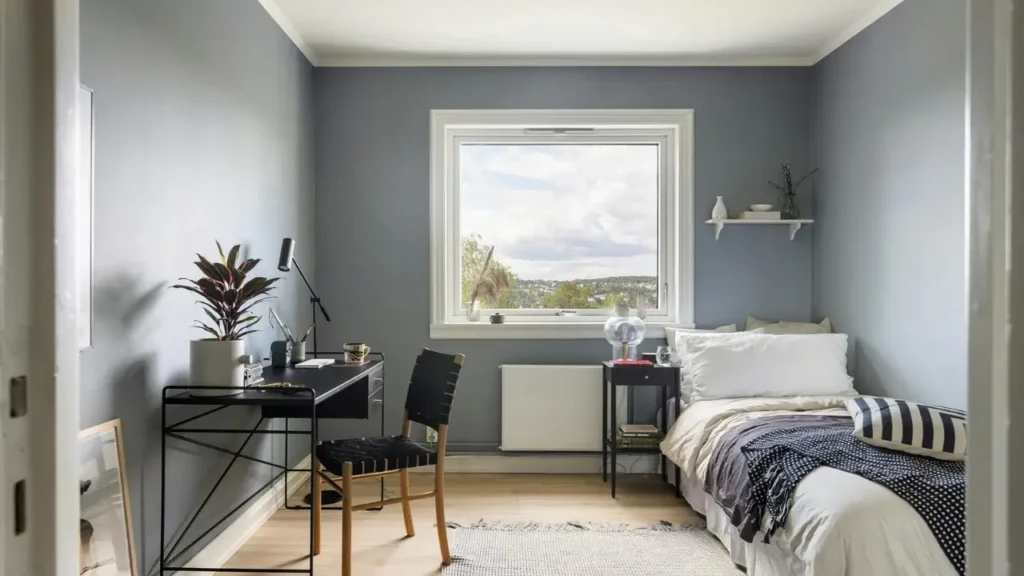
Whether you’re furnishing a small living room, bedroom, dining area, home office, or multipurpose room, the right choices can help you use the available floor area more effectively without sacrificing everyday comfort.
What Makes Furniture Good for a Small Room?
Good small-room furniture is not necessarily miniature furniture. Instead, it should have proportions and features that work with the room’s actual dimensions.
Look for furniture with:
- Appropriate proportions
- Moderate depth
- A compact footprint
- Useful storage
- Vertical storage potential
- Flexible configurations
- Movable or rearrangeable designs
- Foldable or extendable functions when genuinely useful
- Visually lighter bases or frames
- Easy access for cleaning
- Comfortable dimensions
Small Furniture vs. Small-Space Furniture
There is an important difference between small furniture and small-space furniture.
A very small chair may technically save floor space but still be uncomfortable. A narrow desk may fit against a wall but provide insufficient room for a monitor, keyboard, and other essentials. Likewise, an undersized sofa may force you to add extra seating, ultimately using more space.
The better rule is:
Choose the smallest practical furniture—not necessarily the smallest furniture available.
Start with what the room needs to do, then choose furniture that provides that function efficiently.
How to Measure a Small Room Before Buying Furniture
Before looking at furniture styles, measure the room. This is one of the most useful steps you can take because a beautiful piece is not useful if it cannot fit comfortably.
1. Measure the Room
Record:
- Room length
- Room width
- Ceiling height
- Door locations
- Window locations
- Radiators
- Vents
- Built-ins
- Electrical outlets
Also note anything that cannot be moved. A radiator, door swing, or awkward corner can significantly affect furniture placement.
2. Measure Doors and Access Points
Measure more than the room itself.
Check:
- Main doorway
- Interior doors
- Hallways
- Stairways
- Elevator access where applicable
- Tight corners
- Turning areas
Large furniture can fail at the delivery stage even when its final dimensions look perfect on paper.
3. Measure Furniture Depth
Width receives a lot of attention, but depth can be even more important in a narrow room.
A sofa that is only slightly wider than another model may still consume considerably more usable floor space if it is much deeper.
Check the total depth of:
- Sofas
- Chairs
- Cabinets
- Desks
- Bookcases
- Dressers
- Dining tables
4. Plan Walking Paths
Think about how you will actually move through the room.
Check:
- Entry paths
- Furniture-to-furniture clearance
- Door swings
- Chair movement
- Drawer openings
- Closet access
- Window access
A room can technically contain a piece of furniture while still being difficult to use.
5. Use Painter’s Tape
Painter’s tape is an easy way to visualize furniture footprints before buying.
Mark the approximate dimensions of a:
- Sofa
- Bed
- Desk
- Dining table
- Cabinet
- Coffee table
Then walk around the taped area.
If the proposed footprint already feels restrictive without the furniture being there, reconsider the dimensions.
Best Small Living Room Furniture Ideas
The living room often needs to provide several functions in limited space: seating, relaxing, entertaining, storage, and sometimes working.
The key is to prioritize the furniture you use most.
Compact Sofa
A compact sofa can provide substantial seating without overwhelming a smaller room.
Consider:
- Loveseats
- Apartment-size sofas
- Slim-arm sofas
- Compact standard sofas
- Low-profile sofas
When comparing sofas, don’t look only at overall width.
Check:
- Overall width
- Overall depth
- Seat depth
- Arm width
- Back height
- Door clearance
A sofa with slimmer arms can sometimes provide useful seating without increasing the overall footprint.
Small Sectional
A compact sectional can work particularly well when the room has a usable corner.
Options include:
- Compact L-shaped sectionals
- Reversible chaise sectionals
- Modular sectionals
- Corner sectionals
A sectional may replace the need for a separate sofa and chair, but it is not automatically the better choice.
Think about:
- Door placement
- Window position
- Walking paths
- Chaise direction
- Rearrangement needs
A fixed chaise can become inconvenient if the room layout changes later.
Appropriately Scaled Accent Chair
One well-chosen accent chair can provide additional seating without filling the room with multiple small chairs.
Look for:
- Moderate depth
- Slim arms
- Open legs
- Lightweight-looking frames
The goal is to add useful seating without creating another major obstacle in the circulation path.
Storage Ottoman
A storage ottoman can combine several functions:
- Footrest
- Extra seating
- Storage
- Occasional table surface
It can be especially useful when the room does not have space for separate pieces serving each function.
Nesting Tables
Nesting tables are useful when you occasionally need additional tabletop space.
Keep the smaller tables together most of the time and separate them when guests need more surfaces.
Small Coffee Table
Choose the shape according to the room.
Useful options include:
- Round coffee tables
- Oval coffee tables
- Narrow rectangular tables
- Lift-top tables
- Storage coffee tables
A round or oval table can work well where sharp corners would interfere with movement. A narrow rectangular table can work better in a long room.
Slim Media Console
A deep media console can consume more floor space than expected.
Look for a console that provides enough storage and equipment space without extending unnecessarily far into the room.
Narrow Bookcase
A tall, narrow bookcase can provide useful storage while keeping more floor area available.
Use it for:
- Books
- Decorative objects
- Small baskets
- Plants
- Everyday items
Avoid filling every shelf. Leaving some open space can make the storage look more organized.
Small Bedroom Furniture Ideas
The bed normally determines the rest of a small bedroom’s layout, so start there.
Storage Bed
A storage bed can combine sleeping space with additional organization.
Common options include:
- Drawer storage
- Lift-up storage
- Headboard storage
Choose the type based on accessibility.
For example, drawers need enough clearance to open, while lift-up storage requires enough room to raise the mattress platform.
Platform Bed
A platform bed can provide a relatively straightforward footprint and simple structure.
It can work well when you want the bedroom to remain visually uncomplicated without adding unnecessary furniture details.
Floating or Narrow Nightstand
Traditional nightstands can consume valuable floor space.
Alternatives include:
- Floating nightstands
- Narrow bedside tables
- Small pedestal tables
- Wall-mounted shelves where appropriate
The important consideration is whether the surface provides enough room for the items you actually use.
Tall Dresser
Instead of choosing a wide dresser, consider using vertical capacity.
A taller dresser can provide storage while preserving some floor width.
However, make sure drawers can open fully and that the dresser does not interfere with doors or walkways.
Slim Wardrobe
If closet capacity is limited, a slim wardrobe can provide additional clothing storage.
Measure both the wardrobe depth and the door or drawer opening area before buying.
Under-Bed Storage
The area underneath the bed is often useful for items that do not need daily access.
Consider:
- Drawers
- Containers
- Baskets
- Seasonal clothing storage
Keep frequently used items somewhere easier to reach.
Storage Bench
A storage bench at the foot of the bed can combine seating with organization.
Before choosing one, make sure there is enough clearance to walk around the bed comfortably.
Small Dining Room Furniture Ideas
A small dining room requires careful attention to both table dimensions and chair clearance.
Round Dining Table
A round table can work well in compact dining areas where you want to avoid sharp corners.
It can also be useful when circulation needs to happen around multiple sides of the table.
Narrow Rectangular Table
Long, narrow rooms may work better with a rectangular table that follows the room’s proportions.
Avoid choosing a table that leaves insufficient space for chairs.
Drop-Leaf Table
A drop-leaf table can provide a larger dining surface when needed and a smaller footprint between meals.
This can be useful in rooms that perform multiple functions.
Extendable Dining Table
An extendable table can provide everyday seating while offering additional capacity when guests visit.
The important detail is to measure the table in both its compact and extended configurations.
Folding Dining Table
A folding table can be useful in multipurpose rooms where the dining area needs to disappear or become smaller at certain times.
Dining Bench
A dining bench can sometimes slide beneath a table when not in use.
This can help reduce the visual and physical footprint of additional seating.
Stackable or Folding Chairs
If extra chairs are needed only occasionally, stackable or folding designs can provide flexibility without permanently occupying the dining area.
Small Home Office Furniture Ideas
A small office should save space without making everyday work uncomfortable.
Useful options include:
- Narrow desks
- Floating desks
- Wall-mounted desks
- Fold-down desks
- Compact ergonomic chairs
- Vertical shelving
- Slim filing cabinets
- Storage desks
- Cable-management furniture
Don’t Sacrifice Basic Comfort
A smaller desk is useful only if it still supports your actual work.
Consider:
- Desk depth
- Monitor placement
- Keyboard space
- Chair movement
- Legroom
- Storage
- Cable management
A workspace that technically fits but cannot support comfortable daily use is not an efficient solution.
For detailed workspace planning, an article about ergonomic home office furniture can provide additional guidance.
Small Entryway Furniture Ideas
Small entryways can become crowded quickly because they need to handle shoes, coats, bags, keys, and everyday items.
Useful furniture includes:
- Slim consoles
- Narrow shoe cabinets
- Storage benches
- Wall hooks
- Coat racks
- Narrow cabinets
- Small mirrors
- Wall organizers
The most important rule is to preserve a clear entry and exit path.
A storage bench may be useful, for example, but not if its depth makes the doorway difficult to navigate.
Best Multifunctional Furniture for Small Rooms
Multifunctional furniture can be valuable when one room needs to perform several jobs.
Sofa Bed
A sofa bed can provide everyday seating while offering an additional sleeping surface when needed.
It can be useful in:
- Guest rooms
- Small living rooms
- Multipurpose rooms
Storage Bed
A storage bed combines sleeping space with additional storage.
This can be particularly useful when closet or dresser capacity is limited.
Lift-Top Coffee Table
A lift-top coffee table can provide a raised surface for occasional work, dining, or other activities.
Storage Ottoman
A storage ottoman can combine seating, storage, and foot support.
Drop-Leaf Table
A drop-leaf table can function as:
- Dining furniture
- Workspace
- Compact everyday surface
Storage Bench
A storage bench can provide both seating and organization.
Desk With Shelving
A desk with integrated shelving can combine workspace and storage without requiring separate furniture pieces.
Multifunctional Furniture Trade-Offs
Multifunctional designs can also introduce compromises.
They may be:
- More complex
- Heavier
- More expensive
- More difficult to move
- More demanding to assemble
- Dependent on moving components
Choose multifunctional furniture because you genuinely need the additional function—not simply because the product has more features.
Space-Saving Furniture Ideas for Small Rooms
Different furniture categories solve different small-room problems.
| Furniture Type | Useful For | Main Benefit |
|---|---|---|
| Compact sofa | Living rooms | Provides seating with controlled dimensions |
| Storage bed | Bedrooms | Adds storage without another floor-standing unit |
| Nesting tables | Living rooms | Provides flexible surface space |
| Folding table | Dining/multipurpose rooms | Can be stored or reduced when not needed |
| Drop-leaf table | Dining/work areas | Changes footprint according to use |
| Storage ottoman | Living rooms | Combines seating and storage |
| Narrow cabinet | Any room | Uses limited floor width |
| Tall bookcase | Living/office | Uses vertical capacity |
| Floating desk | Office/bedroom | Frees floor area beneath |
| Wall storage | Various rooms | Reduces dependence on floor space |
| Modular furniture | Flexible rooms | Can adapt to changing layouts |
| Folding chairs | Dining/multipurpose rooms | Allows occasional seating without permanent footprint |
The best option depends on the room’s actual problem. Space-saving furniture is useful when it solves a specific limitation rather than simply adding another feature.
Small Room Furniture Layout Ideas
Furniture layout can be just as important as furniture selection.
Layout 1: Furniture Along One Wall
Best for: Narrow rectangular rooms.
Advantage: Leaves more open space in the center.
Potential drawback: Concentrating everything on one side can make the room feel visually unbalanced.
Layout 2: Sofa Against the Wall
Best for: Small living rooms.
Advantage: Preserves central floor space.
Potential drawback: May reduce conversational seating options.
Layout 3: Corner Sectional
Best for: Rooms with a usable corner.
Advantage: Consolidates seating into one area.
Potential drawback: Can be harder to rearrange later.
Layout 4: Dining Table Against the Wall
Best for: Compact dining areas.
Advantage: Can reduce circulation requirements on one side.
Potential drawback: Seating may become less flexible.
Layout 5: Floating Desk in an Unused Corner
Best for: Bedrooms and living rooms that need workspace.
Advantage: Converts an underused area into a functional work zone.
Potential drawback: Still requires adequate chair and leg clearance.
Layout 6: Furniture in Functional Zones
Divide a multipurpose room into zones for:
- Seating
- Working
- Dining
- Storage
Use furniture placement to visually separate these activities without necessarily adding walls.
Layout 7: Open Shelf as a Divider
An open shelf can help separate:
- Living and work areas
- Sleeping and living areas
- Dining and living areas
Because it does not create a solid wall, it can maintain visual connection between the zones.
Furniture Ideas for Narrow Rooms
Narrow rooms require particular attention to depth.
Useful choices include:
- Slim sofas
- Narrow consoles
- Long rectangular tables
- Wall-mounted desks
- Narrow bookcases
- Vertical cabinets
- Wall shelves
- Compact chairs
Be cautious with:
- Very deep sofas
- Large central coffee tables
- Wide cabinets
- Furniture that blocks the natural walking path
In a narrow room, a few extra inches of depth can significantly affect circulation.
Small Room Storage Furniture Ideas
Storage should be practical, accessible, and proportionate to the room.
Useful categories include:
- Tall cabinets
- Narrow bookcases
- Storage beds
- Slim dressers
- Storage ottomans
- Storage benches
- Floating shelves
- Closed cabinets
- Wall organizers
- Under-bed storage
Open vs. Closed Storage
Open Storage
Works well for:
- Books
- Decor
- Frequently used items
- Display pieces
Closed Storage
Works well for:
- Everyday clutter
- Cleaning supplies
- Office supplies
- Less attractive necessities
A combination of open and closed storage is often more practical than using only one type.
Vertical Furniture Ideas for Small Rooms
When floor space is limited, furniture height can provide additional storage without significantly increasing the floor footprint.
Consider:
- Tall bookcases
- Tall wardrobes
- Vertical cabinets
- Floor-to-ceiling shelving
- Floating shelves
- Wall organizers
- Tall storage towers
However, avoid covering every available wall with furniture.
Some empty wall space can provide visual breathing room and prevent the room from feeling overly busy.
Furniture That Makes a Small Room Feel More Open
Furniture does not automatically make a room feel larger, but certain choices can influence how open or crowded the space feels.
Consider:
Appropriate Proportions
Furniture should relate to the room’s dimensions.
Clear Circulation
A clear path can make the room easier to navigate and visually calmer.
Visible Floor Area
Avoid covering every available section of floor with furniture.
Slim Frames
Slim arms, legs, and frames can reduce visual heaviness.
Exposed Legs
Furniture raised slightly from the floor can leave more visible floor area beneath it.
Open Bases
Open shelving and furniture with open lower sections can reduce visual density.
Glass Surfaces
Glass tables can sometimes provide a lighter visual effect, although they require more cleaning and may not suit every household.
Consistent Scale
Furniture pieces with dramatically different proportions can make a small room feel disjointed.
Reduced Clutter
Often, removing an unnecessary furniture piece is more effective than adding another storage solution.
Best Furniture Colors for Small Rooms
Popular furniture colors include:
- White
- Cream
- Beige
- Taupe
- Light gray
- Natural wood
- Brown
- Black
- Soft green
- Navy
There is no single color that automatically works best for every small room.
Instead, consider:
- Natural light
- Wall color
- Flooring
- Existing furniture
- Maintenance requirements
- Overall design style
A darker piece can provide useful contrast in one room while a lighter natural-wood finish may work better in another.
The goal is coordination rather than following a universal color rule.
Best Furniture Styles for Small Rooms
Modern
Modern furniture typically emphasizes clean lines and restrained detailing.
It can work well when you want a straightforward visual language without excessive ornamentation.
Minimalist
Minimalist furniture focuses on fewer, more purposeful pieces.
This can be useful in a small room because every item has a clear role.
Scandinavian
Scandinavian-inspired furniture often combines practical forms, simple styling, and natural-looking materials.
Japandi
Japandi combines simple forms with warm, natural materials and restrained styling.
Mid-Century Modern
Mid-century modern furniture often features functional silhouettes, tapered legs, and recognizable shapes.
Contemporary
Contemporary furniture can incorporate current shapes, mixed materials, and flexible finishes.
Choose the style after solving the room’s functional requirements.
Best Furniture Materials for Small Rooms
Different materials bring different practical considerations.
| Material | Common Uses | Advantages | Considerations |
|---|---|---|---|
| Solid Wood | Tables, beds, chairs | Natural appearance | Can be heavy |
| Engineered Wood | Desks, cabinets | Versatile | Quality varies |
| Metal | Frames, shelving | Structured and durable | Can feel visually heavier |
| Veneer | Tables, cabinets | Wood appearance | Finish quality matters |
| Laminate | Desks, cabinets | Many finish options | Surface quality varies |
| Glass | Tables, shelving | Can create a lighter visual effect | Requires cleaning |
| Upholstery | Sofas, chairs | Comfortable | Requires care |
| Performance Fabric | Seating | Designed for everyday use | Follow care instructions |
Material selection should reflect how the furniture will actually be used.
For example, a frequently used chair may require different upholstery considerations than an occasional accent chair.
Compact Furniture vs. Multifunctional Furniture
Compact and multifunctional furniture solve different problems.
| Factor | Compact Furniture | Multifunctional Furniture |
|---|---|---|
| Footprint | Usually smaller | Varies |
| Main function | One primary use | Multiple uses |
| Complexity | Usually simpler | Can be higher |
| Flexibility | Moderate | Often higher |
| Storage | Depends on design | Often integrated |
| Best for | Simple needs | Multiple room functions |
| Main consideration | Size | Actual usefulness |
Compact furniture is often the better solution when you simply need a smaller piece.
Multifunctional furniture makes more sense when the room genuinely needs multiple functions.
Compact does not automatically mean better, and multifunctional does not automatically mean better.
Freestanding vs. Built-In Furniture for Small Rooms
| Factor | Freestanding | Built-In |
|---|---|---|
| Flexibility | High | Lower |
| Moving | Easier | Difficult |
| Custom fit | Limited | High |
| Installation | Simple | More involved |
| Storage efficiency | Varies | Can be excellent |
| Best for | Flexible rooms | Long-term custom layouts |
Built-ins can make excellent use of awkward dimensions, alcoves, and unusual room shapes.
Freestanding furniture provides greater flexibility and can be rearranged, replaced, or moved more easily.
For renters or people expecting to move, that flexibility can be particularly useful.
Affordable Small Room Furniture Ideas
Furnishing a small room affordably does not mean buying the cheapest furniture available.
A better strategy is to buy fewer pieces that genuinely fit the room.
Smart buying strategy:
- Prioritize essential furniture.
- Buy frequently used pieces first.
- Compare construction and materials.
- Consider secondhand furniture.
- Mix new and used pieces where appropriate.
- Choose multifunctional furniture only when useful.
- Avoid buying furniture simply because an empty corner exists.
A cheap piece that does not fit the room can become expensive in practical terms if you later need to replace it.
Furniture Ideas for Different Small Rooms
Small Living Room
Prioritize:
- Compact sofa
- Small coffee table
- Storage ottoman
- Slim media console
- Vertical storage
Small Bedroom
Prioritize:
- Storage bed
- Narrow nightstand
- Tall dresser
- Slim wardrobe
Small Dining Room
Prioritize:
- Round or narrow table
- Dining bench
- Folding or stackable chairs
Small Home Office
Prioritize:
- Proper desk
- Compact ergonomic chair
- Vertical storage
Small Entryway
Prioritize:
- Slim console
- Shoe storage
- Wall hooks
- Mirror
Small Multipurpose Room
Prioritize:
- Foldable furniture
- Modular furniture
- Storage
- Flexible layouts
The room’s purpose should determine the furniture list rather than the other way around.
Furniture Features Worth Considering
Some furniture features can be genuinely useful in a small room.
Built-In Storage
Useful when additional storage is needed without adding another standalone piece.
Modular Construction
Helpful when furniture may need to change configuration.
Reversible Chaise
Useful when the room layout may change or when you are unsure which side should contain the chaise.
Folding Mechanisms
Useful when furniture needs to disappear or become smaller between uses.
Nesting Capability
Useful when additional surfaces are needed occasionally.
Extendable Surfaces
Useful for dining or working when additional space is required only sometimes.
Lift-Top Surfaces
Useful when a table needs to serve as an occasional workspace.
Adjustable Height
Useful when furniture performs different activities or needs to accommodate different users.
Removable Covers
Potentially useful for households where easy cleaning is important, depending on the specific furniture construction.
Casters
Useful where furniture needs to move regularly, provided the floor and furniture design are suitable.
Vertical Storage
Useful when floor space is more limited than wall height.
Replaceable Components
Potentially valuable when individual parts can be replaced instead of replacing the entire piece.
The rule is simple: choose a feature because it solves a real problem.
Small Room Furniture Mistakes to Avoid
1. Buying Before Measuring
Always measure first.
2. Ignoring Furniture Depth
A piece can have an acceptable width while still being too deep.
3. Choosing an Oversized Sofa
A sofa that dominates the room can restrict every other activity.
4. Blocking Doors
Check both door location and swing.
5. Blocking Windows
Avoid unnecessarily interfering with natural light and window access.
6. Forgetting Chair Clearance
Dining chairs and desk chairs require space to move.
7. Buying Too Many Tiny Pieces
Several small furniture pieces can create more visual clutter than fewer appropriately sized pieces.
8. Ignoring Vertical Storage
If floor space is limited, consider using available wall height.
9. Buying Only From Product Photos
Always check dimensions, materials, assembly information, and access requirements.
10. Choosing Style Over Function
A beautiful piece is still a poor choice if it does not work in the room.
11. Adding Unnecessary Multifunctional Features
More features can mean more complexity without solving an actual problem.
12. Forgetting Delivery Access
Measure entrances, hallways, stairs, and elevators where applicable.
13. Ignoring Assembly Requirements
A large piece may be easier to bring into the room if it arrives in manageable components, but always check the actual assembly requirements.
14. Making Storage Difficult to Access
Storage only helps if you can comfortably reach and use it.
15. Filling Every Empty Corner
An empty corner is not necessarily a problem that needs furniture.
16. Using Furniture That Is Too Deep
Depth can quickly reduce usable circulation.
17. Mixing Too Many Furniture Scales
Large and tiny pieces can look disconnected when their proportions are not coordinated.
18. Forgetting Future Flexibility
Consider whether the furniture can still work if the room’s purpose or layout changes.
The 7-Step Small Room Furniture Buying Framework
Step 1 — Measure the Room
Record dimensions, doors, windows, vents, built-ins, and other fixed obstacles.
Step 2 — Define the Room’s Main Function
Decide what the room needs to accomplish first.
Step 3 — Identify Essential Furniture
Separate must-have pieces from optional furniture.
Step 4 — Check Width and Depth
Never rely on width alone.
Step 5 — Plan Circulation
Make sure people can walk comfortably and doors, drawers, and chairs can operate properly.
Step 6 — Add Storage or Multifunctionality
Use these features only when they solve an actual problem.
Step 7 — Choose Style
Once function and proportions are solved, select colors, materials, and design details.
This approach prevents you from choosing furniture based purely on appearance and trying to force the room to accommodate it afterward.
The Five-Minute Small Room Furniture Test
Before purchasing a piece, ask these seven questions:
1. Does it physically fit?
Check the furniture dimensions against the room.
2. Can it get through the doorway?
Consider the actual delivery route.
3. Can people walk around it comfortably?
Check circulation from multiple directions.
4. Can drawers, cabinets, and doors open?
A storage unit is not useful if another piece blocks it.
5. Does it block windows, vents, or important outlets?
Check the furniture’s final position, not just its footprint.
6. Does it solve a real problem?
Avoid buying furniture simply because you have an empty space.
7. Can it be moved or rearranged later?
Flexibility can become valuable if your needs change.
Small Room Furniture Buying Checklist
- Did I measure the room?
- Did I measure the furniture width?
- Did I measure the furniture depth?
- Did I check doorway clearance?
- Did I check walking paths?
- Can doors and drawers open fully?
- Will chairs have enough clearance?
- Does it block a window or vent?
- Does it solve a real need?
- Is the storage accessible?
- Do I actually need the multifunctional features?
- Is the furniture comfortable?
- Does it work with my existing furniture?
- Can I rearrange it later?
FAQ — Small Room Furniture Ideas
What furniture is best for a small room?
The best furniture is appropriately proportioned for the room and comfortable enough for everyday use. Prioritize essential pieces with practical dimensions, useful storage, and layouts that preserve circulation.
How do I choose furniture for a very small living room?
Start by measuring the room and identifying the main seating requirement. A compact sofa, appropriately sized coffee table, storage ottoman, and slim storage piece may be enough. Avoid filling the room with multiple small pieces simply because they are individually compact.
What sofa works best in a small room?
A compact sofa, loveseat, slim-arm sofa, or appropriately sized sectional can work depending on the room’s shape. Compare both width and depth, and consider seat depth, arm width, doorway access, and circulation.
Is a sectional good for a small room?
A sectional can work well when the room has a usable corner and the sectional’s dimensions preserve circulation. A reversible or modular configuration can offer more flexibility than a fixed design.
What furniture saves the most space?
Storage beds, nesting tables, folding tables, floating desks, narrow cabinets, vertical bookcases, and multifunctional furniture can all save useful space depending on the room’s needs.
How can I add storage without overcrowding a small room?
Consider vertical storage, under-bed storage, narrow cabinets, storage ottomans, floating shelves, and furniture with integrated storage. Prioritize accessible storage instead of simply adding more cabinets.
What dining table is best for a small room?
Round, narrow rectangular, drop-leaf, folding, or extendable tables can work well depending on the room shape and seating requirements. Always consider chair clearance when measuring.
How do I arrange furniture in a narrow room?
Pay particular attention to furniture depth. Place deeper pieces where they do not interrupt the main walking path and consider narrow consoles, slim seating, wall-mounted desks, and vertical storage.
Is multifunctional furniture worth buying?
It can be worthwhile when the extra function solves a real problem. However, multifunctional furniture can be heavier, more complex, or harder to move, so additional features should have a clear purpose.
How do I make a small room feel less crowded?
Protect circulation, reduce unnecessary furniture, maintain appropriate proportions, use storage strategically, and leave some visible floor and wall space. Avoid filling every empty area.
What furniture should I buy first?
Start with the furniture required for the room’s primary function. In a bedroom, that usually means the bed. In a living room, it may be the main seating. In an office, start with a suitable desk and chair.
Should I use large or small furniture in a small room?
Neither extreme is automatically correct. Choose furniture that is proportionate to the room and large enough to perform its intended function comfortably.
What colors work well with small-room furniture?
White, cream, beige, taupe, light gray, natural wood, brown, black, soft green, and navy can all work depending on the room’s lighting, wall color, flooring, and existing furniture. There is no universally correct furniture color for every small room.
Final Thoughts — Make Every Furniture Piece Earn Its Space
The best small room furniture ideas are not about squeezing as many pieces as possible into limited floor space.
They are about making thoughtful decisions before buying.
Measure the room. Consider depth as well as width. Protect circulation. Prioritize essential furniture. Use vertical storage where appropriate. Choose multifunctional pieces selectively. Keep furniture proportions consistent and make sure storage remains accessible.
Most importantly, don’t feel pressured to fill every empty corner.
A small room can be comfortable, practical, and stylish when each piece has a clear purpose.
The best small room furniture ideas are not about fitting more furniture into less space. They are about choosing pieces that provide the comfort, storage, and functionality you need without overwhelming the room.
Related Reading
For readers who need more specific guidance, naturally connect this article to related topics such as:
- Furniture Ideas for Small Apartments
- Space Saving Furniture Ideas
- Best Furniture for First Apartment
- Small Sectional Sofa Ideas
- Compact Sectional Sofa for Small Spaces
- Low Profile Modern Sofa
- Performance Fabric Sofa Ideas
- Washable Sofa for Families
- Ergonomic Home Office Furniture
- Small Bedroom Storage Furniture
- Minimalist Floating Desk Setup
- High Quality Affordable Furniture
- High End Furniture Look for Less
Keep these links contextual. For example, link Furniture Ideas for Small Apartments when the reader’s situation is apartment-specific, while Space Saving Furniture Ideas can provide broader furniture strategies for different types of homes.
