
Introduction
A room can have plenty of storage and still look cluttered when everyday belongings remain visible. Shoes pile up near the entryway, blankets sit on the sofa, chargers collect around the desk, and small accessories take over otherwise clean surfaces.
That is where hidden storage furniture ideas become useful.
Hidden storage furniture combines everyday furniture with concealed places to put belongings away. A storage ottoman can hide blankets, a coffee table can contain drawers, a bed can provide under-bed storage, and a sideboard can keep dining essentials behind closed doors.
The goal, however, is not to hide everything.
The best hidden storage furniture makes frequently used items easy to access while reducing unnecessary visual clutter. A concealed compartment that is difficult to open or requires moving another piece of furniture may create more inconvenience than it solves.
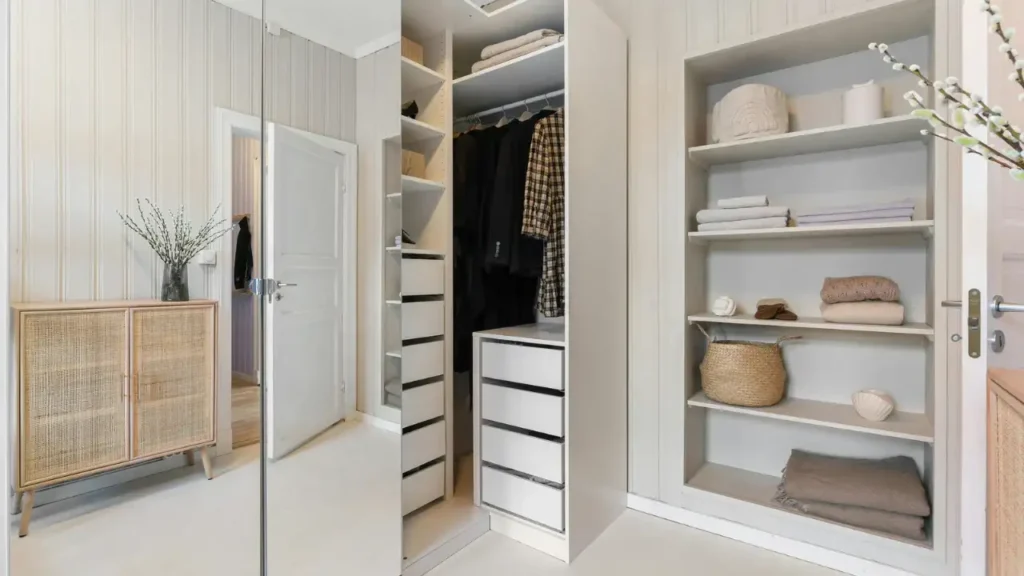
So when choosing furniture with hidden storage, consider three things together: capacity, accessibility, and how well the furniture fits the room.
What Is Hidden Storage Furniture?
Hidden storage furniture is furniture that includes storage compartments that are partially or completely concealed from normal view.
This can include:
- Concealed drawers
- Cabinets behind doors
- Lift-top compartments
- Storage beneath seating
- Under-bed storage
- Integrated headboard storage
- Hidden shelves
- Built-in compartments
- Furniture with concealed cable storage
Hidden storage does not necessarily mean a secret compartment. In most homes, it simply means keeping everyday belongings out of sight while retaining practical access.
Hidden Storage vs. Open Storage
| Feature | Hidden Storage | Open Storage |
|---|---|---|
| Visibility | Items are concealed | Items remain visible |
| Visual clutter | Can reduce visible clutter | Can increase visual activity |
| Accessibility | Varies by design | Usually very easy |
| Best for | Everyday clutter | Books, displays, frequently accessed items |
| Appearance | Cleaner surfaces | More decorative and open |
Neither approach is automatically better. A well-designed room often combines concealed, closed, and open storage.
What Makes Hidden Storage Furniture Good?
Not every furniture piece with a compartment is a useful storage solution. The quality of the design matters more than the number of hidden features.
Storage Is Actually Accessible
Storage should be easy enough to use regularly.
If you have to move a chair, open three panels, or completely clear a surface every time you need something, the compartment may not be practical for everyday items.
The Furniture Remains Comfortable
The primary purpose of the furniture should still work properly.
A storage bench should remain comfortable to sit on. A bed should remain comfortable for sleeping. A coffee table should still work as a coffee table.
The Storage Matches the Items
Think about what you actually need to store.
Blankets need more volume than remote controls. Shoes need different organization than office supplies. Seasonal items may tolerate less convenient access than things you use every day.
The Furniture Fits the Room
More storage is not helpful if the furniture blocks a doorway, reduces walking space, or overwhelms the room.
The Mechanism Is Practical
Check hinges, drawer slides, lift mechanisms, doors, and other moving parts. Frequently used storage benefits from simple, reliable access.
Cleaning Is Still Possible
Storage furniture should not create difficult-to-clean gaps or inaccessible areas where dust and debris collect.
The Design Fits Your Interior
Good concealed storage should look like intentional furniture rather than an obvious storage container.
Best Hidden Storage Furniture Ideas for the Living Room
Living rooms often need to accommodate seating, entertainment, books, blankets, games, and everyday accessories. Furniture with concealed storage can reduce surface clutter without adding another large cabinet.
Storage Ottoman
A storage ottoman can serve several roles:
- Footrest
- Extra seating
- Concealed storage
- Occasional surface
Use it for blankets, pillows, games, magazines, or other items that you want nearby but not constantly visible.
Choose a size that works with your sofa and leaves enough room to move around it.
Lift-Top Coffee Table
A lift-top coffee table can combine:
- Coffee-table surface
- Temporary work surface
- Concealed storage
The hidden compartment can hold books, remotes, games, chargers, or small household items.
Pay attention to the movement of the top. Make sure it can open without hitting the sofa or another piece of furniture.
Coffee Table With Concealed Drawers
Drawers can be particularly useful for small items that you want close at hand.
Remote controls, coasters, chargers, notebooks, and game accessories can stay organized without remaining on the tabletop.
Storage Sofa
Some sofas incorporate storage beneath seats or within sections of the design.
This can be useful for blankets, pillows, or other living-room items, but check how easily the storage opens and whether the mechanism changes how you normally use the sofa.
Storage Bench
A storage bench can provide seating and concealed organization at the same time.
It can work near a window, behind a sofa, or along a wall depending on the room layout.
Media Console With Closed Cabinets
A media console with closed storage can hide:
- Gaming accessories
- Remote controls
- Cables
- Media equipment
- Small electronics
Closed doors are particularly useful when you want the television area to look visually calm.
Side Table With a Hidden Drawer
A small concealed drawer can provide convenient storage for items you use frequently but do not want displayed.
It is especially useful beside a sofa or reading chair.
Cabinet With Concealed Storage
A closed cabinet can handle larger quantities of items than a small drawer or ottoman.
Choose a cabinet based on both internal capacity and external dimensions so it does not dominate the room.
Hidden Storage Furniture Ideas for the Bedroom
Bedrooms benefit from concealed storage because visible clutter can quickly make the space feel busy.
Storage Bed
A storage bed combines sleeping space with additional organization.
Common designs include:
- Under-bed drawers
- Lift-up platforms
- Large under-bed compartments
Choose based on what you plan to store and how frequently you need access.
Storage Headboard
A storage headboard can provide small compartments for:
- Books
- Charging accessories
- Personal items
- Reading materials
- Small lighting equipment
It can reduce the need for separate bedside furniture when designed appropriately.
Nightstand With Hidden Drawers
A nightstand with concealed drawers can keep personal belongings close while maintaining a cleaner tabletop.
Use the drawers for items such as chargers, glasses, books, or other bedside essentials.
Storage Bench at the Foot of the Bed
A storage bench can combine seating with space for:
- Blankets
- Bedding
- Clothing
- Accessories
Make sure the bench does not interfere with movement around the bed.
Bedside Cabinet With Closed Storage
Closed cabinets are useful when you want to keep frequently used items organized without displaying everything.
Dresser With Concealed Compartments
Some dressers include smaller internal compartments that can separate personal items from everyday clothing.
The important consideration is accessibility. Hidden compartments are useful only when they are easy enough to use for the belongings they are designed to hold.
Wardrobe With Internal Organization
A wardrobe does not need a secret compartment to provide hidden storage.
Closed wardrobe doors already conceal clothing, accessories, and other belongings while keeping the room visually cleaner.
Hidden Storage Furniture Ideas for Small Spaces
Small rooms require careful balance between storage capacity and floor space.
Useful options include:
- Storage beds
- Storage ottomans
- Lift-top tables
- Slim storage cabinets
- Wall-mounted cabinets
- Storage benches
- Tall cabinets with doors
- Floating cabinets
- Narrow consoles with drawers
The key is to add useful storage without unnecessarily increasing the room’s physical or visual footprint.
A tall cabinet, for example, can use vertical space while preserving more floor area than a wide, low cabinet.
Hidden Storage Furniture Ideas for the Entryway
Entryways are natural clutter collection points. Shoes, keys, bags, mail, coats, and accessories can quickly make a small entrance look disorganized.
Storage Bench
A storage bench provides a place to sit while putting on shoes and can conceal footwear, bags, or seasonal accessories.
Shoe Cabinet
A closed shoe cabinet keeps footwear out of sight and can create a cleaner-looking entrance.
Check ventilation and shelf configuration when choosing storage for frequently worn footwear.
Console With Drawers
A narrow console with drawers can provide a convenient place for keys, mail, sunglasses, and other small belongings.
Mirror Cabinet
A mirror cabinet combines a reflective surface with concealed storage.
It can be particularly useful when wall space is limited.
Closed Coat Cabinet
A closed cabinet can hide coats, bags, and seasonal accessories rather than leaving them exposed on hooks.
Storage Bench With Shoe Compartments
This combines seating with footwear organization.
Choose a design that allows easy access rather than forcing you to remove other items every time you need a pair of shoes.
Hidden Storage Furniture Ideas for the Home Office
A home office can look cluttered because of paperwork, chargers, cables, stationery, and small electronics.
Desk With Concealed Drawers
Integrated drawers can keep documents, stationery, chargers, and accessories within easy reach.
Desk With Hidden Cable Management
Cable-management compartments can keep power cords and chargers less visible while making them easier to organize.
Closed Storage Cabinet
A closed cabinet can store office supplies, paperwork, equipment, and other items that do not need to remain visible.
Filing Cabinet With Closed Storage
Dedicated filing storage can be useful when you regularly handle physical documents. Otherwise, a simpler drawer or cabinet may be enough.
Storage Credenza
A credenza can provide a work surface, equipment storage, and concealed organization in one piece.
Wall-Mounted Cabinet
A wall-mounted cabinet can provide storage while leaving more floor space available for the desk and chair.
Hidden Storage Furniture Ideas for the Dining Room
Dining areas often need storage for table linens, serving pieces, cookware, and entertaining accessories.
Dining Bench With Storage
A storage bench can provide seating while concealing blankets, table linens, or less frequently used dining items.
Sideboard With Closed Cabinets
A sideboard is one of the most practical ways to add concealed dining storage without relying entirely on open shelving.
Buffet With Drawers
Drawers can keep smaller dining accessories organized while larger cabinets hold serving pieces and linens.
Dining Table With Drawers
A dining table with integrated drawers can provide convenient storage for napkins, placemats, or small dining accessories.
Cabinet With Adjustable Shelving
Adjustable shelves make it easier to accommodate items of different heights.
The most important consideration is accessibility. Frequently used dining items should not be hidden so well that retrieving them becomes inconvenient.
Hidden Storage Furniture Ideas for the Kitchen
Kitchen storage is often associated with cabinetry, but furniture can also provide useful concealed organization.
Kitchen Island With Concealed Storage
A kitchen island can combine food-preparation space with closed cabinets or drawers.
Pantry Cabinet With Doors
A tall pantry cabinet can keep food, cookware, and kitchen supplies organized behind closed doors.
Appliance Garage
An appliance garage can conceal frequently used countertop appliances while keeping them relatively accessible.
Freestanding Storage Cabinet
A freestanding cabinet can add storage without requiring a permanent built-in installation.
Banquette Seating With Storage
A storage banquette can combine dining seating with concealed storage beneath the seats.
Rolling Kitchen Cart With Closed Storage
A rolling cart can provide additional storage and flexible workspace when the room layout allows it.
Multifunctional Furniture With Hidden Storage
Hidden storage and multifunctional furniture often overlap, but they are not identical.
A storage cabinet may primarily provide organization, while a storage ottoman may provide seating, foot support, and concealed storage.
Useful combinations include:
Storage Ottoman
Seating + storage + footrest
Storage Bench
Seating + organization
Storage Bed
Sleeping + storage
Lift-Top Coffee Table
Table + workspace + storage
Sofa Bed With Storage
Seating + sleeping + organization
Desk With Storage
Workspace + organization
Dining Bench With Storage
Seating + storage
Console Table With Drawers
Surface + concealed organization
The best combination is the one that solves functions you actually use.
Best Hidden Storage Furniture for Different Types of Clutter
Instead of choosing storage based only on appearance, start with the items you need to hide.
| Item to Store | Useful Furniture |
|---|---|
| Blankets | Storage ottoman, bench, storage bed |
| Shoes | Entryway cabinet, storage bench |
| Remotes | Coffee-table drawer, side table |
| Toys | Storage ottoman, closed cabinet |
| Books | Closed cabinet, storage bench |
| Office supplies | Desk drawers, credenza |
| Cables | Desk drawer, media console |
| Seasonal clothing | Storage bed, wardrobe |
| Table linens | Sideboard, dining cabinet |
| Small accessories | Nightstand, console drawers |
Think about frequency of use and item size, not simply how much storage a compartment appears to offer.
Hidden Storage vs. Open Storage vs. Closed Storage
| Storage Type | Visibility | Accessibility | Best Use |
|---|---|---|---|
| Hidden | Low | Varies | Everyday clutter |
| Open | High | Very easy | Books and display |
| Closed | Low | Usually easy | General organization |
| Built-In | Low or moderate | Varies | Custom storage |
A room rarely needs just one type of storage.
Open shelving works well for items you want to see and access quickly. Closed storage conceals everyday belongings. Hidden compartments can be useful when you want storage integrated directly into furniture.
Hidden Storage Furniture vs. Traditional Storage Furniture
| Factor | Hidden Storage Furniture | Traditional Storage Furniture |
|---|---|---|
| Visual clutter | Can be lower | Depends on design |
| Accessibility | Varies | Usually predictable |
| Appearance | Cleaner surfaces | Can be more visible |
| Complexity | Can be higher | Often simpler |
| Best for | Concealing everyday items | General organization |
| Main concern | Access | Capacity and fit |
Hidden storage is not automatically superior.
If you need to reach something several times a day, a straightforward drawer or open shelf may be more practical than a complicated concealed compartment.
Best Hidden Storage Furniture Features to Consider
Lift-Top Compartments
Useful for blankets, games, books, and small household items.
Soft-Close Drawers
Where available, soft-close hardware can make frequently used drawers more comfortable to operate.
Full-Extension Drawers
These can make deeper storage easier to access because more of the drawer contents become visible.
Adjustable Shelves
Adjustable shelves allow storage furniture to accommodate different item sizes.
Removable Dividers
Dividers can help organize smaller belongings without permanently restricting the storage space.
Concealed Cable Management
Especially useful for desks and media consoles.
Hidden Casters
Casters can make some furniture easier to move while keeping the wheels less visually prominent.
Lift-Up Seating
Useful for benches and ottomans that need frequent access.
How to Choose Hidden Storage Furniture
Use this process before buying.
Step 1: Identify What You Need to Hide
Be specific.
Are you storing blankets, toys, cables, shoes, clothing, paperwork, or small accessories?
Step 2: Separate Daily-Use Items From Occasional Items
Daily-use belongings should generally receive easier access than seasonal items.
Step 3: Measure the Available Space
Record width, depth, height, and nearby obstacles.
Step 4: Check Storage Capacity
Make sure the compartment is large enough for the items you actually intend to store.
Step 5: Check Accessibility
Consider how the doors, drawers, lids, or panels open.
Step 6: Measure Open Dimensions
Do not measure only the closed furniture.
Check how much space is needed when drawers are extended, doors are open, or a lift-top is raised.
Step 7: Consider Cleaning Access
Make sure you can clean underneath, behind, and inside the furniture.
Step 8: Evaluate Construction and Hardware
Look at hinges, drawer operation, handles, joints, and other frequently used components.
Step 9: Match the Furniture to Your Interior
Consider scale, materials, finishes, colors, and existing furniture.
Step 10: Consider Future Storage Needs
Choose storage that can remain useful if your household needs change.
How to Measure for Hidden Storage Furniture
Before buying, measure more than the furniture’s listed width and height.
Check:
- Room width
- Room length
- Furniture depth
- Ceiling height
- Doorways
- Hallways
- Stairs
- Elevator access
- Windows
- Radiators
- Vents
- Electrical outlets
- Existing furniture
- Walking paths
- Drawer clearance
- Door clearance
- Lift-top clearance
Measure Every Configuration
This is one of the most important steps.
A storage bench needs space for its lid or drawers.
A lift-top table needs clearance for the top to rise.
A cabinet needs enough space for doors or drawers to open.
A storage bed with drawers needs enough room beside the bed for those drawers to extend.
The furniture must fit not only when it is closed, but when you are actually using it.
Hidden Storage Furniture Layout Ideas
Storage Ottoman in Front of a Sofa
This keeps blankets, games, or accessories close to the seating area while providing another useful surface or seat.
Leave enough room to move around the ottoman comfortably.
Storage Bench at the Foot of a Bed
This provides seating and hidden storage without necessarily requiring another cabinet.
Make sure it does not interfere with the main walking path.
Slim Cabinet Along a Narrow Wall
A shallow closed cabinet can turn an underused wall into useful storage without creating a large obstruction.
Closed Media Console Under a TV
A media console with closed cabinets can conceal electronics and cables while providing a stable visual base for the television.
Storage Bench Under a Window
This can make use of otherwise underutilized space while creating additional seating.
Check window access and heating or ventilation requirements first.
Tall Cabinet in an Unused Corner
Vertical storage can provide significant capacity without requiring a wide footprint.
Floating Cabinet Below a Wall-Mounted TV
A wall-mounted cabinet can provide concealed storage while keeping some floor area visible underneath.
Dining Sideboard Along One Wall
A sideboard can provide concealed storage for dining accessories while keeping the center of the dining area open.
How to Make Hidden Storage Furniture Look Stylish
Hidden storage should feel integrated into the room rather than visually announcing that it is storage furniture.
Use Consistent Finishes
Matching or coordinated finishes can create a more cohesive appearance.
Match Furniture Scale
Large storage furniture can overwhelm a small room even when its storage is useful.
Coordinate Hardware
Consistent handles and hardware can help different furniture pieces feel connected.
Mix Closed and Open Storage
A room made entirely of closed cabinets can feel heavy. A mixture of open and concealed storage can create visual balance.
Avoid Too Many Large Cabinets
More storage is not always better.
Leave Visual Breathing Room
Do not fill every wall simply because there is available space.
Use Furniture With Clean Lines
Simple silhouettes can help storage furniture integrate into modern, minimalist, Scandinavian, or contemporary interiors.
Keep Storage Surfaces Clear
A closed cabinet can reduce clutter, but the top can still become a clutter zone if it is treated like an extra shelf.
Coordinate Wood Tones
When using several wood furniture pieces, pay attention to undertones and finishes rather than trying to make every piece identical.
Avoid Overfilling Compartments
Overfilled storage becomes difficult to use and can eventually recreate the clutter problem you were trying to solve.
The goal is not to hide everything. The goal is to control what remains visible.
Best Furniture Styles for Hidden Storage
Modern
Modern furniture often uses clean silhouettes, integrated storage, and restrained hardware.
Minimalist
Minimalist furniture can work particularly well when reducing visible clutter is a priority.
Scandinavian
Scandinavian-inspired furniture combines practical storage with warm materials and simple forms.
Japandi
Japandi furniture can pair natural materials with restrained organization and uncluttered silhouettes.
Mid-Century Modern
Mid-century-inspired cabinets, consoles, and dressers can integrate drawers and closed storage without looking overly bulky.
Contemporary
Contemporary furniture provides flexibility for combining different materials, finishes, and storage configurations.
No single style is universally best. The furniture should fit the room’s architecture, existing pieces, and practical needs.
Best Materials for Hidden Storage Furniture
| Material | Common Uses | Advantages | Considerations |
|---|---|---|---|
| Solid Wood | Benches, cabinets, beds | Natural appearance | Can be heavy |
| Engineered Wood | Cabinets, desks | Versatile | Quality varies |
| Veneer | Cabinets, tables | Wood appearance | Finish quality matters |
| Laminate | Storage furniture | Many finishes | Surface quality varies |
| Metal | Frames, cabinets | Structured | Can feel visually heavier |
| Upholstery | Ottomans, benches | Comfortable | Requires care |
| Glass | Display furniture | Light visual effect | Shows fingerprints |
Material is only part of the equation. Construction, hardware, joints, finishes, and overall design also affect how practical furniture will be over time.
Hidden Storage Furniture for Families
Families often need storage that can quickly hide everyday clutter without making belongings difficult to access.
Useful options include:
- Toy-storage ottomans
- Storage benches
- Closed cabinets
- Storage beds
- Dining benches
- Media consoles
- Entryway cabinets
Focus on:
easy access + easy cleaning + practical organization + suitable construction
For frequently used family furniture, storage should be simple enough that everyone can actually use it.
Hidden Storage Furniture for Homes With Pets
Pets create a different type of storage challenge because toys, leashes, grooming supplies, blankets, and other accessories need convenient places to go.
Useful options include:
- Storage benches
- Closed cabinets
- Storage ottomans
- Closed media consoles
- Storage furniture for pet supplies
- Furniture with accessible cleaning areas
Pay attention to cleaning access. Hidden storage should not create difficult-to-reach areas where pet hair, dirt, or moisture can accumulate.
Affordable Hidden Storage Furniture Ideas
Hidden storage does not always require expensive furniture.
Prioritize Storage You Will Actually Use
Spend more attention on pieces that solve everyday problems.
Choose Simple Mechanisms When Possible
A straightforward drawer or cabinet can be more useful than a complicated mechanism.
Consider Secondhand Furniture
Used dressers, cabinets, benches, and sideboards can sometimes provide useful concealed storage at a lower cost.
Mix Open and Hidden Storage
You do not need every piece of furniture to have concealed storage.
Repurpose Suitable Furniture
An existing bench, cabinet, or console may become useful storage with a better internal organization system.
Compare Storage Capacity With Price
Do not evaluate a storage piece by appearance alone. Consider how much genuinely usable storage it provides.
A simple cabinet with practical capacity can be better value than an expensive piece with a tiny decorative hidden compartment.
When Hidden Storage Furniture Is Not the Best Choice
Concealed storage is not always the right answer.
It may be less suitable when:
- You access the items constantly
- Open shelving would be more convenient
- The compartment is difficult to reach
- The mechanism is unnecessarily complicated
- Storage encourages unnecessary accumulation
- Cleaning becomes difficult
- The furniture becomes excessively heavy
- Concealed storage takes away valuable usable space
For example, books that you reference throughout the day may be easier to keep on an accessible shelf than inside a closed compartment.
Concealed does not automatically mean convenient.
Common Hidden Storage Furniture Mistakes to Avoid
1. Buying Without Measuring
A storage piece still needs to fit the room.
2. Ignoring Furniture Depth
Depth can affect circulation as much as width.
3. Forgetting Drawer and Door Clearance
A cabinet can technically fit while still being unusable once its doors are open.
4. Choosing Inaccessible Compartments
Storage should match how often you need the items.
5. Storing Frequently Used Items in Difficult Locations
Daily-use belongings deserve convenient access.
6. Buying Too Much Storage
More storage can encourage more accumulation.
7. Filling Every Compartment
Leave enough room to retrieve and return items easily.
8. Ignoring Cleaning Access
Make sure you can clean around and inside the furniture.
9. Choosing Complicated Mechanisms Unnecessarily
Complexity should provide a real benefit.
10. Blocking Vents or Outlets
Always consider the furniture’s relationship with existing room infrastructure.
11. Ignoring Delivery Access
Measure doorways, stairs, elevators, and tight corners.
12. Choosing Storage Capacity Instead of Actual Needs
A large compartment is not automatically useful if you have nothing appropriate to store there.
13. Buying Oversized Cabinets
Storage furniture should be proportional to the room.
14. Using Too Many Closed Pieces
A room filled with large closed cabinets can feel visually heavy.
15. Forgetting Future Needs
Consider whether the furniture will remain useful as your storage requirements change.
Compact Furniture vs. Hidden Storage Furniture
These two concepts solve different problems.
| Factor | Compact Furniture | Hidden Storage Furniture |
|---|---|---|
| Primary goal | Reduce footprint | Conceal belongings |
| Storage | Optional | Usually included |
| Space efficiency | Often high | Depends on design |
| Accessibility | Usually simple | Varies |
| Complexity | Usually lower | Can be higher |
| Best for | Limited floor space | Visible clutter |
| Main concern | Size | Accessibility |
A compact piece may be better when floor space is the primary problem.
Hidden storage is more valuable when visible clutter is the main issue.
Sometimes one piece can solve both problems.
Freestanding vs. Built-In Hidden Storage Furniture
| Factor | Freestanding | Built-In |
|---|---|---|
| Flexibility | High | Low |
| Custom fit | Moderate | High |
| Moving | Easier | Difficult |
| Installation | Simple | More involved |
| Awkward spaces | Limited | Excellent potential |
| Storage efficiency | Varies | Can be very high |
| Best for | Flexible homes | Long-term layouts |
Built-ins can make excellent use of alcoves, unusual wall dimensions, and underused spaces.
Freestanding furniture, however, is easier to move, replace, or rearrange when your needs change.
Best Hidden Storage Furniture Ideas by Room
| Room | Furniture | Hidden Storage Use |
|---|---|---|
| Living Room | Storage ottoman | Blankets, games |
| Living Room | Media console | Cables, electronics |
| Bedroom | Storage bed | Seasonal items |
| Bedroom | Storage bench | Bedding, clothing |
| Entryway | Shoe cabinet | Footwear |
| Home Office | Desk drawers | Supplies, cables |
| Dining Room | Sideboard | Table linens, serving items |
| Kitchen | Storage island | Cookware and accessories |
| Small Room | Tall cabinet | General organization |
Use this table as a quick starting point, then choose furniture based on the room’s actual dimensions and daily routines.
Features Worth Paying More For
Not every premium feature deserves a higher price.
Features that can be worthwhile when they improve everyday use include:
- Quality hardware
- Smooth drawer operation
- Strong hinges
- Accessible storage
- Adjustable shelves
- Durable finishes
- Replaceable components
- Practical cable management
- Good construction
- Appropriate upholstery
The important question is not whether a feature sounds premium. Ask whether you will use it frequently enough to benefit from it.
Features You May Not Need
Be cautious about paying extra for:
- Tiny secret compartments
- Difficult-to-access storage
- Complicated electronic mechanisms
- Excessive internal dividers
- Decorative hidden compartments
- Storage that is too shallow for its intended purpose
- Mechanisms that are rarely used
- Oversized furniture designed primarily around storage
A simple, well-designed cabinet can often be more useful than a complicated piece with numerous features.
7-Step Hidden Storage Furniture Buying Framework
1. Identify the Clutter Problem
What exactly needs to disappear from view?
2. Determine Access Frequency
Is the item used daily, weekly, seasonally, or rarely?
3. Choose the Appropriate Furniture Type
Consider a bench, ottoman, cabinet, bed, table, console, or another piece that naturally fits the room.
4. Measure the Room
Include circulation, doors, windows, vents, and nearby furniture.
5. Measure the Storage Configuration
Check drawers, doors, lids, and fully opened dimensions.
6. Evaluate Usability
Ask whether you can easily put items away and retrieve them.
7. Choose the Style
Once functionality is solved, select the material, color, finish, and style that fit the interior.
Five-Minute Hidden Storage Furniture Test
Before buying, ask:
- What exactly will I store inside?
- How often will I need it?
- Can I access it without moving other furniture?
- Does the furniture fit the room?
- Does it fit when drawers or doors are open?
- Is the storage capacity realistic?
- Can I clean around and inside it?
- Does the primary furniture function remain comfortable?
- Does it work with my existing furniture?
- Would a simple cabinet or shelf solve the same problem?
If you cannot answer the last question confidently, compare the hidden-storage piece with a simpler alternative before buying.
Hidden Storage Furniture Buying Checklist
- Did I measure the room?
- Did I measure the furniture?
- Did I check furniture depth?
- Did I check drawer and door clearance?
- Did I check lift-top clearance?
- Do I know what will be stored inside?
- Is the storage easy to access?
- Can frequently used items be reached quickly?
- Does the furniture provide enough capacity?
- Can I clean around and inside it?
- Does it block a window, vent, or outlet?
- Does it fit through the doorway?
- Is the mechanism practical?
- Does the furniture remain comfortable?
- Does it work with my existing interior?
- Will I still need additional storage afterward?
FAQ — Hidden Storage Furniture Ideas
What is hidden storage furniture?
Hidden storage furniture is furniture that incorporates compartments, drawers, cabinets, or other storage areas that are partially or completely concealed from normal view. Examples include storage beds, storage ottomans, closed cabinets, lift-top tables, and furniture with concealed drawers.
What furniture has the best hidden storage?
The right choice depends on what you need to store. Storage beds work well for bulky bedroom items, storage ottomans are useful for living-room belongings, while cabinets and sideboards can provide larger concealed storage for general household items.
How can I hide clutter without adding more cabinets?
Use furniture that already serves another purpose. Storage ottomans, storage benches, lift-top tables, storage beds, and furniture with integrated drawers can add concealed organization without requiring a separate storage cabinet.
What is the best hidden storage furniture for a small room?
Storage beds, storage ottomans, lift-top tables, slim cabinets, floating cabinets, and tall storage furniture can be useful. The best option depends on whether your main problem is limited floor space, visible clutter, or both.
Are storage ottomans useful?
They can be very useful when you need seating, a footrest, and accessible storage in the same area. Their usefulness depends on choosing a size and opening mechanism that work comfortably with the room.
Is a storage bed worth buying?
A storage bed can be worthwhile when you need additional bedroom storage and have suitable access to the space underneath or inside the bed. Consider how often you will access the storage before choosing a design with a more complex mechanism.
How do I hide storage in a living room?
Consider storage ottomans, lift-top coffee tables, media consoles with closed cabinets, storage benches, side tables with drawers, and closed cabinets. Match the storage type to how frequently you use the items.
What furniture is best for hidden entryway storage?
Storage benches, shoe cabinets, narrow consoles with drawers, mirror cabinets, and closed coat cabinets can all work well. Choose based on entryway width and the items you need to store.
Is hidden storage better than open shelving?
Not necessarily. Open shelving is usually easier to access and can be useful for books and display items. Hidden storage is better when reducing visible clutter is the priority. Combining both can create a more practical room.
What should I store in hidden furniture compartments?
Good candidates include blankets, seasonal accessories, toys, cables, games, shoes, paperwork, table linens, and other belongings that you want nearby but do not need to keep visible.
How do I choose furniture with concealed storage?
Start with the items you need to store, then consider access frequency, furniture dimensions, open clearance, storage capacity, construction, cleaning access, and how the piece fits your existing room.
Can hidden storage furniture look stylish?
Yes. Concealed storage can be integrated into modern, minimalist, Scandinavian, Japandi, mid-century modern, and contemporary furniture designs. Coordinating scale, finishes, materials, and hardware can help storage furniture blend naturally into the room.
What is the difference between hidden and concealed storage?
The terms are often used interchangeably. Both generally describe storage that is not immediately visible. In practical furniture design, this can mean drawers, cabinets, lift-top compartments, under-seat storage, or other integrated spaces.
Final Thoughts
The best hidden storage furniture ideas are not about hiding every possession you own. They are about giving everyday belongings a practical place to go without allowing them to dominate the room visually.
Start by identifying the clutter problem. Then choose furniture that naturally solves it.
A storage ottoman may be enough for blankets and games. A storage bed may make sense for seasonal belongings. A closed media console can control cables and electronics, while a narrow entryway cabinet can keep shoes and accessories organized.
Always consider accessibility alongside capacity. Measure the furniture in both its normal and open configurations, protect walking space, check cleaning access, and avoid complicated mechanisms that provide little real benefit.
Most importantly, do not feel that every piece of furniture needs hidden storage. A balanced room can combine open shelves, closed cabinets, drawers, and concealed compartments.
The best hidden storage furniture ideas are not about hiding everything. They are about creating a home where everyday belongings have a practical place to go without overwhelming the room visually.
