
Choosing furniture for a compact dining area can be surprisingly difficult. You want enough room to eat comfortably, but you also need to leave space for walking, opening doors, pulling out chairs, and moving around the room.
A round dining table for small space living can be an excellent solution because its curved shape eliminates sharp corners and can create a more flexible flow around the dining area. However, choosing the right diameter, base, chairs, and placement matters just as much as the shape itself.
The best table isn’t necessarily the smallest one you can fit. It should provide enough surface for everyday meals while leaving sufficient room around it for comfortable movement.
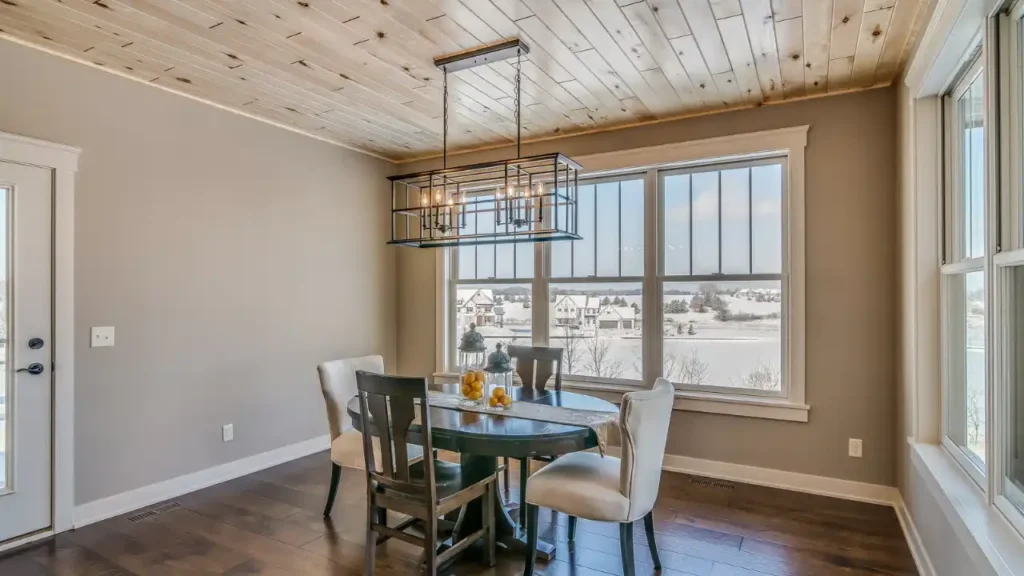
In this guide, you’ll learn how to choose the right size, compare round and rectangular tables, understand seating capacity, explore space-saving designs, and create a stylish dining area that works in a small apartment, kitchen, or dining room.
Is a Round Dining Table Good for a Small Space?
Yes, a round dining table can work very well in a small space, especially when the room has awkward corners or limited walking space.
Because there are no corners sticking into the surrounding area, a round table can feel easier to navigate. This doesn’t automatically mean it occupies less floor area than every rectangular table, but its curved profile can make the surrounding space feel less restrictive.
Easier Movement Around Corners
One of the biggest advantages of a round table is its lack of sharp corners.
In a tight dining area, corners can become obstacles when you’re walking between the table and a wall, kitchen cabinet, or another piece of furniture. A round tabletop creates a continuous curved edge, which can make the path around the table feel smoother.
This can be especially useful in:
- Small apartments
- Narrow dining areas
- Compact kitchens
- Open-plan living spaces
- Dining corners
- Breakfast nooks
The actual floor space still needs to be measured carefully, but the shape can make everyday movement more comfortable.
Better for Tight Dining Areas
A small round dining table can work particularly well when the dining area doesn’t have a straightforward rectangular layout.
For example, a round table may fit naturally into a corner near a window or in an unused area between the kitchen and living room.
Its central shape also makes it easier to position chairs around the table without having to align the furniture with long walls.
More Comfortable Conversation
Round tables have another advantage that has nothing to do with measurements: conversation.
Everyone sits at a similar distance from the center, making it easy to see and talk with the other people at the table. For a small household, a compact round table can therefore provide both practical functionality and a more social dining experience.
When a Round Table May Not Be the Best Choice
A round table isn’t always the best solution.
A narrow rectangular dining table may work better if your room is long and narrow or if the table needs to sit directly against a wall. A wall-mounted or folding table can be even more practical in an extremely compact apartment.
Before buying, consider the actual shape of your room rather than assuming that round is automatically better.
What Size Round Dining Table Is Best for a Small Space?
The ideal size depends on how many people need to use the table and how much room is available around it.
Diameter is particularly important with a round table. Increasing the diameter by only a few inches can make a noticeable difference to the overall footprint.
30–36 Inch Round Dining Table
A 30- to 36-inch table is suitable for very compact dining areas.
It’s generally best for:
- Two people
- Small breakfast areas
- Studio apartments
- Tiny kitchens
- Occasional dining
A smaller table can be convenient, but don’t choose a diameter so small that plates, glasses, and serving dishes constantly compete for space.
For everyday dining, two people may find a table around the upper end of this range more comfortable than an extremely compact option.
36–42 Inch Round Dining Table
A 36- to 42-inch round table can be a practical choice for two to four people, depending on the design.
This range is particularly useful for:
- Small apartments
- Compact kitchens
- Dining nooks
- Couples
- Small households
A pedestal base can make this size even more flexible because chairs aren’t competing with four separate table legs.
44–48 Inch Round Dining Table
A 44- to 48-inch table can provide a more comfortable dining surface for four people.
This is worth considering if you have a small dining room but don’t want the tabletop to feel cramped.
Before choosing one, measure the entire dining area rather than measuring only the space where the tabletop will sit.
50–60 Inch Round Dining Table
Tables between 50 and 60 inches are generally more appropriate when you need seating for four to six people and have enough surrounding space.
They can work in larger compact dining rooms, but they may be too large for a small apartment or narrow kitchen.
The goal is to balance tabletop space with usable clearance. A large table that leaves barely enough room to pull out chairs isn’t a successful small-space solution.
Round Dining Table Size & Seating Guide
| Table Diameter | Approx. Seating | Best For |
|---|---|---|
| 30–36 inches | 2 | Tiny spaces and breakfast nooks |
| 36–42 inches | 2–4 | Small apartments and kitchens |
| 44–48 inches | 4 | Compact dining rooms |
| 50–54 inches | 4–5 | Everyday family dining |
| 55–60 inches | 5–6 | Larger compact dining areas |
These are practical guidelines rather than strict rules. Actual seating depends on chair width, table construction, leg placement, and how much personal space each person prefers.
A table may technically accommodate four chairs but still feel uncomfortable if the chairs are wide or the tabletop is crowded with dishes.
How Much Space Do You Need Around a Round Dining Table?
One of the most common small-space furniture mistakes is measuring only the table.
You need to measure the entire dining zone, including the chairs and the space required to move around them.
Table-to-Wall Clearance
Think about what surrounds the table.
If the table sits close to a wall, consider whether someone can comfortably sit there and whether the chair can be pulled out.
Also check nearby:
- Kitchen cabinets
- Refrigerator doors
- Pantry doors
- Room doors
- Windows
- Sideboards
- Walkways
A table that technically fits may still be impractical if opening a cabinet means hitting a dining chair.
Space for Pulling Out Chairs
Dining chairs need additional space behind them.
When planning your layout, don’t measure from the table edge to the wall as though nobody will sit there. Pull out the chair and imagine someone sitting in it.
This is why a slightly smaller table with comfortable chair clearance can be much better than a larger table squeezed into the room.
Walking Paths
The dining area should also allow people to move through the room.
If your dining table is part of an open-plan kitchen and living area, consider the main walking routes before deciding where to place it.
Avoid creating a narrow passage between the table and another frequently used piece of furniture.
Measure Before You Buy
A simple trick can prevent an expensive mistake.
Use painter’s tape, cardboard, or newspaper to mark the approximate tabletop diameter on the floor. Then place chairs around the outline.
Walk around the mock-up and pull the chairs out as if you’re sitting down.
This gives you a much better idea of whether the table will work than looking at dimensions on a product page.
Best Round Dining Table Designs for Small Spaces
Not all round dining tables use space in the same way. The base, tabletop construction, and ability to expand can have a major impact on functionality.
Pedestal Round Dining Table
A pedestal round dining table has a central support rather than four traditional corner legs.
This can be particularly useful in small spaces because chairs have more freedom around the perimeter.
Best for: Flexible seating, small dining rooms, and compact apartments.
A pedestal design can also create a cleaner visual appearance, particularly when paired with slim dining chairs.
Four-Leg Round Dining Table
A traditional four-leg table can be sturdy and attractive, but the legs may affect where chairs can be positioned.
Before buying, check the distance between the legs and consider how the leg placement interacts with your chairs.
Four-leg designs work well when the table is large enough and the room provides comfortable clearance.
Drop-Leaf Round Dining Table
A drop-leaf design is one of the most useful choices for flexible dining.
Sections of the tabletop can fold down when you need more floor space and be raised when you need additional dining surface.
This makes a drop-leaf table especially useful in:
- Studio apartments
- Small kitchens
- Multi-purpose rooms
- Dining areas that double as workspaces
Extendable Round Dining Table
An extendable table allows you to keep a smaller footprint for everyday meals and expand it when guests arrive.
This can be a smart alternative to purchasing a permanently large dining table.
When shopping, check both the closed and expanded dimensions. The expanded size matters because you’ll need enough room for the additional chairs.
Folding Round Dining Table
A folding design can be useful when dining furniture needs to disappear or become smaller between meals.
It’s particularly practical for very flexible spaces where the dining area has multiple purposes.
Glass-Top Round Dining Table
Glass can create a visually lightweight appearance because you can see through the tabletop and notice more of the floor beneath it.
This doesn’t necessarily reduce the physical footprint, but it can help a compact room feel less visually crowded.
Glass also requires more attention to fingerprints, scratches, and cleaning.
Light Wood Round Dining Table
A light wood table can bring warmth without making a small room feel excessively heavy.
Oak, ash, maple, and similar finishes can work beautifully with minimalist, Scandinavian, Japandi, and modern organic interiors.
A slim tabletop and simple legs can further reduce visual weight.
Best Round Dining Table for a Small Apartment
Apartment dining areas often need to perform more than one job. A table might be used for eating, working, studying, entertaining, or even storing everyday items.
Small Studio Apartment
In a studio, prioritize flexibility.
A compact round dining table can work well because it doesn’t visually divide the room as strongly as a large rectangular table.
Consider:
- A 30- to 42-inch diameter
- Slim chairs
- A pedestal base
- Lightweight construction
- Drop-leaf functionality
- Chairs that tuck completely underneath
If the dining area is also used as a workspace, choose a table that looks appropriate in both settings.
Small One-Bedroom Apartment
A small one-bedroom apartment may have a little more flexibility, but floor space is still valuable.
Consider placing the table in an unused corner between the kitchen and living room rather than automatically dedicating an entire room to dining.
A compact round dining table can create a clear dining zone without requiring a large furniture footprint.
Open-Plan Apartment
In an open-plan apartment, a round table can visually separate the dining area from the kitchen or living room without creating a hard barrier.
You can define the area with:
- A small round rug
- Pendant lighting
- Coordinated dining chairs
- A compact sideboard
- Matching wood finishes
Keep the furniture scale consistent so the dining zone doesn’t overwhelm the rest of the room.
Apartment Dining Nook
A dining nook can be an ideal location for a small round table.
Consider placing it near:
- A window
- A kitchen corner
- A built-in bench
- A breakfast area
- An unused wall
A built-in bench can be particularly useful because it can occupy less visual space and provide seating that remains close to the wall.
Round Dining Table for a Small Kitchen
A kitchen dining area has additional challenges because the table needs to coexist with appliances, cabinets, counters, and food-preparation zones.
Kitchen Breakfast Nook
A small round table can fit naturally into a breakfast nook.
Choose a size that allows people to sit comfortably without blocking the main kitchen pathway.
Table Near a Kitchen Island
If you want a round dining table near an island, carefully measure the space between the two pieces.
Remember that both areas need usable clearance. A beautiful arrangement can become frustrating if someone seated at the table blocks access to the kitchen.
Corner Dining Area
A round table can soften an unused kitchen corner.
Instead of pushing the table so close to the walls that the chairs become difficult to use, consider whether one side could incorporate a bench.
Small Eat-In Kitchen
For an eat-in kitchen, prioritize circulation.
Check whether:
- Cabinet doors can open fully
- Refrigerator doors have enough room
- People can walk behind seated diners
- Appliances remain accessible
- Chairs can be pulled out without blocking the kitchen
The smallest possible table isn’t necessarily the best choice if it creates daily frustration.
Round vs. Rectangular Dining Table for Small Spaces
Both shapes can work in compact homes, but they solve different layout problems.
| Feature | Round Table | Rectangular Table |
|---|---|---|
| Movement | Easy around corners | Can feel tighter near corners |
| Seating | Flexible | More clearly defined |
| Small rooms | Often works well | Useful in narrow rooms |
| Conversation | Excellent | Good |
| Wall placement | Less efficient | Very efficient |
| Awkward corners | Good | More difficult |
| Dining nooks | Excellent | Good depending on layout |
When to Choose a Round Table
Choose a round table when:
- You want easier movement around the tabletop
- The room has awkward corners
- Conversation is important
- You’re furnishing a dining nook
- You prefer a softer visual shape
- Several seating positions need to remain flexible
When a Rectangular Table Makes More Sense
A rectangular table may be better when:
- The room is long and narrow
- The table needs to sit against a wall
- You need maximum seating along a straight wall
- You regularly serve large meals
- The room’s architecture strongly favors a linear layout
The right answer depends on the room, not simply the table shape.
Round vs. Square Dining Table for a Small Space
Round and square tables can both work well in compact rooms, but their geometry creates different experiences.
A square table has four corners, which can make it more difficult to navigate when placed close to walls or furniture.
A round table removes those corners and can provide a smoother circulation path.
A square table can still be a strong option if your room has a square footprint and the table will sit naturally in the center.
Consider:
- Floor footprint
- Corner clearance
- Seating needs
- Conversation
- Placement
- Visual weight
- Walkway requirements
If the room is truly tight and people need to move around the table frequently, the rounded profile may provide a more comfortable experience.
How Many People Can Sit at a Small Round Dining Table?
Seating capacity depends on more than diameter. Chair width, table thickness, leg placement, and the amount of personal space people prefer all affect comfort.
Round Table for 2 People
A small round table is ideal for couples, individuals, or a compact breakfast area.
A diameter around 30 to 36 inches can work for two people, provided the tabletop provides enough room for plates and everyday items.
Round Table for 4 People
For four people, a table around 36 to 48 inches may work depending on the desired comfort level and chair size.
If four people use the table every day, don’t choose a diameter solely because four chairs technically fit.
Round Table for 5 People
Five-person seating can be more challenging because spacing needs to be considered carefully.
A somewhat larger tabletop can make meals more comfortable, especially if you use wider chairs.
Round Table for 6 People
A round table for six generally requires a significantly larger diameter and surrounding dining area.
If your room is very small, an extendable design may be more practical than keeping a large six-person table in the room every day.
Best Chairs for a Small Round Dining Table
The chairs you choose can have almost as much impact on space as the table itself.
Slim Dining Chairs
Slim-profile chairs reduce visual bulk and can make the dining area feel more open.
Look for chairs with relatively narrow frames that still provide adequate support.
Armless Dining Chairs
Armless chairs are often easier to position around a round table.
Without wide arms extending outward, they can also tuck closer to the tabletop.
Chairs That Fully Tuck Under the Table
This is one of the most useful features for small dining areas.
When chairs can slide almost completely underneath the table, the dining footprint can look much smaller when nobody is eating.
Lightweight Dining Chairs
Lightweight chairs are easier to move when you need to change the room’s layout.
They can be especially useful in apartments where the dining area has multiple functions.
Upholstered Chairs
Upholstered chairs can add comfort and softness, but pay attention to their overall dimensions.
A heavily padded chair with wide arms may consume considerably more space than a slim upholstered design.
Dining Benches
A bench can be a smart option when the table sits against a wall or dining nook.
It can provide multiple seating positions and can often remain close to the wall when not being used.
Space-Saving Round Dining Table Ideas
A small dining area doesn’t have to look cramped. The key is to think about the whole arrangement rather than the tabletop alone.
Choose a Pedestal Base
A central pedestal can reduce interference between table legs and chairs.
This can make it easier to position seating where you want it.
Use Chairs That Tuck Completely Underneath
When shopping for a small dining table with chairs, test whether the chairs actually fit beneath the table.
This can significantly reduce the visual footprint when the dining area isn’t being used.
Place the Table Near a Window
A window can make a compact dining area feel brighter and more connected to the outside.
A small round table placed near a window can also turn an otherwise underused area into an inviting dining nook.
Create a Built-In Dining Nook
A bench along one wall combined with a small round table can make efficient use of a compact corner.
The bench can provide useful seating without requiring a full chair behind every position.
Use a Drop-Leaf Design
A drop-leaf round table gives you the ability to change the footprint depending on the situation.
Keep the leaves lowered during everyday use and raise them when more tabletop space is needed.
Choose a Visually Light Table
Slim legs, thinner tops, open bases, glass, and light finishes can help reduce visual heaviness.
The table still occupies physical space, but it may feel less dominant in the room.
Match the Table With the Room
A table that coordinates with nearby flooring, cabinets, or furniture can feel more integrated.
You don’t need everything to match exactly. Similar undertones and complementary materials can create a more cohesive appearance.
Use a Small Rug Carefully
A rug can define the dining area, but it should be appropriately scaled.
Avoid choosing a rug so small that the dining chairs fall off the edges whenever they’re pulled out.
In a particularly tight room, skipping the rug altogether may create a cleaner and more practical layout.
How to Make a Small Dining Area Feel Bigger
Furniture arrangement has a major influence on how a compact dining area feels.
Choose Light or Natural Finishes
Light wood, soft neutrals, and natural finishes can create a calm appearance.
A dark table can still work beautifully, but consider balancing it with lighter walls, flooring, or chairs if the room already has a lot of visual weight.
Keep the Floor Visible
Avoid filling every available area with furniture.
Leaving some visible floor around the dining set can make the room feel less crowded.
Avoid Oversized Chairs
Large dining chairs can quickly overwhelm a small table.
Look for chairs that provide sufficient comfort without unnecessarily wide frames or bulky arms.
Use Mirrors Strategically
A well-placed mirror can reflect light and visually expand the room.
Instead of covering an entire wall, consider using one appropriately sized mirror where it can reflect a window, light source, or attractive part of the room.
Improve Lighting
Lighting can make a small dining space feel more inviting.
A pendant light positioned appropriately above the table can create a defined focal point without requiring additional floor space.
For a small round table, a centered light fixture can also reinforce the circular arrangement.
Keep the Tabletop Uncluttered
A small tabletop becomes crowded quickly.
Instead of keeping large decorative objects permanently in the center, use a small centerpiece or leave most of the surface open.
This makes the table easier to use and helps the dining area feel cleaner.
Use a Consistent Color Palette
Too many competing colors and materials can make a small area feel visually busy.
A simple palette of two or three primary tones can create a calmer appearance while allowing the table to become a deliberate part of the room.
Best Materials for a Small Round Dining Table
The material affects durability, maintenance, weight, and visual appearance.
Solid Wood
Solid wood remains a popular choice for dining furniture because it provides warmth and durability.
Pros:
- Durable
- Warm appearance
- Timeless style
- Can work with many interior designs
Cons:
- Some designs can look visually heavy
- May require more care depending on the finish
A slim-profile solid wood table can give you the warmth of wood without overwhelming a compact room.
Engineered Wood
Engineered wood can provide a practical alternative to solid wood.
Pros:
- Often more affordable
- Many finishes available
- Wide variety of designs
Cons:
- Quality varies
- Damage to some finishes may be difficult to repair
Check the construction and finish rather than judging quality solely by appearance.
Glass
Glass tabletops can create a lighter visual effect.
Pros:
- Modern appearance
- Visually lightweight
- Easy to coordinate with many styles
Cons:
- Fingerprints can be noticeable
- Requires regular cleaning
- Scratches and damage may be concerns depending on the glass and construction
Metal
Metal can be useful for modern and contemporary dining furniture.
Pros:
- Slim profiles are common
- Contemporary appearance
- Can pair well with wood or glass
Cons:
- Some designs can feel cold
- Finish quality matters
A combination of a wood tabletop and slim metal base can provide warmth while maintaining a contemporary look.
Marble or Stone-Look Tops
Stone and marble-inspired tables can bring a premium appearance to a dining room.
Pros:
- Sophisticated appearance
- Strong visual focal point
- Works well with luxury interiors
Cons:
- Can feel visually heavy
- Natural stone can be heavy
- Maintenance varies by material
- Some surfaces may be more vulnerable to staining or scratching
In a small room, balance a substantial tabletop with lighter chairs and an open base.
Best Styles for a Round Dining Table in a Small Space
Your dining table should work with the rest of your interior rather than looking like an isolated piece.
Modern Minimalist
Choose:
- Simple silhouettes
- Slim legs
- Neutral finishes
- Minimal decoration
- Clean-lined chairs
A minimalist round table can be particularly effective in small rooms because it doesn’t introduce unnecessary visual complexity.
Scandinavian
Scandinavian-inspired dining areas often combine light wood, soft colors, simple forms, and comfortable chairs.
A pale wood round table can work beautifully in a compact dining nook.
Japandi
Japandi combines Japanese-inspired simplicity with Scandinavian warmth.
Look for:
- Natural wood
- Soft neutral colors
- Simple construction
- Low visual clutter
- Functional furniture
A compact pedestal or simple-leg round table can fit naturally into this style.
Mid-Century Modern
For a mid-century look, consider a round tabletop with tapered legs and warm wood tones.
Pair it with streamlined chairs rather than oversized seating.
Farmhouse
A farmhouse dining table can work in a small room, but avoid excessively thick tops or oversized bases.
A smaller round wood table with simple chairs can deliver the character of farmhouse style without making the room feel crowded.
Modern Organic
Modern organic interiors combine natural materials, soft curves, neutral colors, and relaxed textures.
A round wood dining table is a natural fit, especially when paired with woven, upholstered, or sculptural chairs.
Small Luxury Dining Area
A small dining area can still look luxurious.
Focus on quality and proportion rather than size.
A compact table with:
- A refined finish
- Elegant lighting
- Comfortable chairs
- A simple centerpiece
- Coordinated materials
can create a sophisticated dining environment without requiring a large room.
Common Mistakes When Buying a Round Dining Table for a Small Space
The wrong table can make a compact room feel uncomfortable even if its dimensions appear reasonable on paper.
Mistake 1: Choosing the Table Before Measuring
Never rely on visual estimates.
Measure the room and surrounding furniture first.
Mistake 2: Ignoring Chair Clearance
A table may fit perfectly while the chairs don’t.
Always consider the space needed to pull chairs out and sit comfortably.
Mistake 3: Buying a Table That’s Too Large
More tabletop space isn’t automatically better.
If the table leaves little room for movement, everyday dining can become frustrating.
Mistake 4: Forgetting Door and Cabinet Swing
A nearby cabinet or refrigerator door can require more space than expected.
Test all nearby openings before finalizing the layout.
Mistake 5: Using Oversized Dining Chairs
Large chairs can consume valuable space and make the table appear crowded.
Choose seating that is appropriately scaled to the tabletop and room.
Mistake 6: Ignoring Table Height
The table and chairs should work together ergonomically.
Check the table height and compare it with the seat height of your chosen chairs.
Mistake 7: Choosing a Heavy Base for a Tiny Room
A thick pedestal or oversized base can make a small dining area feel visually dense.
If the room already has substantial furniture, a lighter base may work better.
Mistake 8: Prioritizing Appearance Over Daily Function
A beautiful table isn’t useful if you can’t comfortably walk around it or open the nearby cabinets.
Always imagine how you’ll use the dining area every day.
How to Choose the Best Round Dining Table for Your Small Space
Use this simple process before making a purchase.
Step 1: Measure the Available Area
Measure the total floor area available for the dining setup.
Don’t forget nearby walls, furniture, appliances, and walkways.
Step 2: Decide How Many People Need to Sit
Determine whether you need a table for:
- 2 people
- 4 people
- 5 people
- 6 people
Choose based on everyday use rather than occasional entertaining.
Step 3: Select the Appropriate Diameter
Use the seating guide as a starting point.
If you’re between two sizes, don’t automatically choose the larger one. Consider whether the additional tabletop space is worth the reduction in surrounding clearance.
Step 4: Check Chair Clearance
Place your intended chair dimensions into the layout.
Make sure people can sit down and stand up without constantly hitting walls or other furniture.
Step 5: Choose the Right Base
Compare pedestal and four-leg designs.
For very flexible seating, a pedestal base can be especially useful.
Step 6: Consider Expandability
If you occasionally host guests, an extendable or drop-leaf table can be more practical than a permanently oversized table.
Step 7: Match the Table to Your Interior
Consider:
- Wood tone
- Finish
- Chair style
- Lighting
- Flooring
- Cabinet colors
- Overall design style
Step 8: Check Material and Maintenance
Think about how the table will be used.
Families with young children, frequent entertainers, and people who prefer low-maintenance furniture may have different material priorities.
Step 9: Compare Total Dimensions
Don’t look only at tabletop diameter.
Check:
- Overall height
- Base width
- Leg placement
- Chair dimensions
- Expanded dimensions
- Packaging dimensions if delivery access is limited
Step 10: Test the Layout Before Buying
Mark the tabletop footprint on the floor and position temporary chairs around it.
Walk around the setup and simulate normal use.
This simple test can reveal problems before you spend money.
Round Dining Table Buying Checklist
Before purchasing, use this checklist:
- Measure available floor space
- Measure nearby doors and cabinets
- Choose the required seating capacity
- Check table diameter
- Check table height
- Check chair dimensions
- Measure chair pull-out space
- Consider pedestal vs. four legs
- Consider drop-leaf or extendable designs
- Check material durability
- Consider cleaning requirements
- Match the table with existing furniture
- Confirm delivery dimensions if buying online
- Check the expanded dimensions if the table extends
- Confirm the table can pass through your doorway or stairway
Frequently Asked Questions About Round Dining Tables for Small Spaces
Is a round dining table good for a small space?
Yes. A round dining table can be a strong choice for a small space because its curved edge eliminates sharp corners and can make movement around the table feel easier. It works particularly well in dining nooks, compact kitchens, and apartments. However, the room’s layout and required clearance still determine whether it is the best option.
What is the smallest round dining table for 2 people?
A round table around 30 to 36 inches in diameter can work for two people, depending on how you use it. If you regularly place multiple dishes, serving pieces, or work materials on the table, choosing a little more tabletop space can provide better everyday comfort.
What size round table seats 4 comfortably?
A round table in approximately the 36- to 48-inch range can work for four people, depending on chair width and how much personal space you prefer. For everyday family dining, choosing enough tabletop space for plates and serving dishes is more important than simply fitting four chairs.
Is a round or rectangular table better for a small dining room?
It depends on the room’s shape. A round table can work particularly well in compact rooms, awkward corners, and dining nooks because it has no sharp corners. A rectangular table may be better for a narrow room or a layout where the table needs to sit close to a wall.
How much space should be left around a round dining table?
The required space depends on whether the surrounding area is a wall, furniture, or a walking path. You need enough room to pull chairs out and allow people to move comfortably around the dining area. Always measure the chair footprint and walking route rather than measuring only the tabletop.
Can a round dining table work in a small kitchen?
Yes. A small round table can work well in a breakfast nook, corner dining area, or eat-in kitchen. The key is making sure it doesn’t interfere with cabinet doors, appliances, refrigerator access, or the main kitchen walkway.
Is a pedestal table better for small spaces?
A pedestal table can be particularly useful in a small space because its central base may allow chairs to be positioned more freely around the tabletop. However, the stability and base design should still be evaluated before buying.
What type of chairs work best with a small round table?
Slim, armless chairs are often a practical choice. Chairs that tuck fully under the tabletop can reduce the dining area’s visual footprint. Benches can also work well in dining nooks or when one side of the table is positioned near a wall.
Can a round dining table seat 6 in a small room?
It can, but the table itself is only part of the equation. Six-person seating requires enough tabletop space and enough surrounding clearance for chairs. In a very small room, an extendable table may be more practical because you can maintain a smaller footprint for everyday dining and expand it when necessary.
Final Thoughts
The best round dining table for small space living isn’t necessarily the smallest table you can find. It’s the one that gives you the right balance of tabletop space, seating, comfort, clearance, and style.
For two people, a compact 30- to 36-inch table may be enough. For four people, moving toward the 36- to 48-inch range can provide more practical dining space. If you occasionally host larger groups, a drop-leaf or extendable design can offer additional flexibility without requiring a large permanent footprint.
The table base matters too. A pedestal can make chair placement easier, while slim legs and lightweight materials can reduce visual bulk. The right chairs are equally important because oversized seating can quickly consume the space you’ve saved with a compact table.
Most importantly, measure the entire dining zone before buying. Consider walls, cabinets, doors, walkways, chair clearance, and everyday movement—not just the tabletop diameter.
With the right proportions and layout, a small dining area can be comfortable, functional, and stylish. A well-chosen round table can become a practical centerpiece without making your home feel crowded.
