
A small dining area can be challenging to furnish. A table that looks perfectly proportioned in a showroom may feel oversized once it is surrounded by chairs, walls, kitchen cabinets, and walkways. But limited square footage does not mean you have to sacrifice comfort or style.
The right dining table for small spaces can make a compact apartment, kitchen corner, studio, or small dining room feel much more functional. The key is to consider more than the tabletop. Table shape, dimensions, seating capacity, chair size, clearance, storage, and how often you entertain all affect whether a dining table actually works in your room.
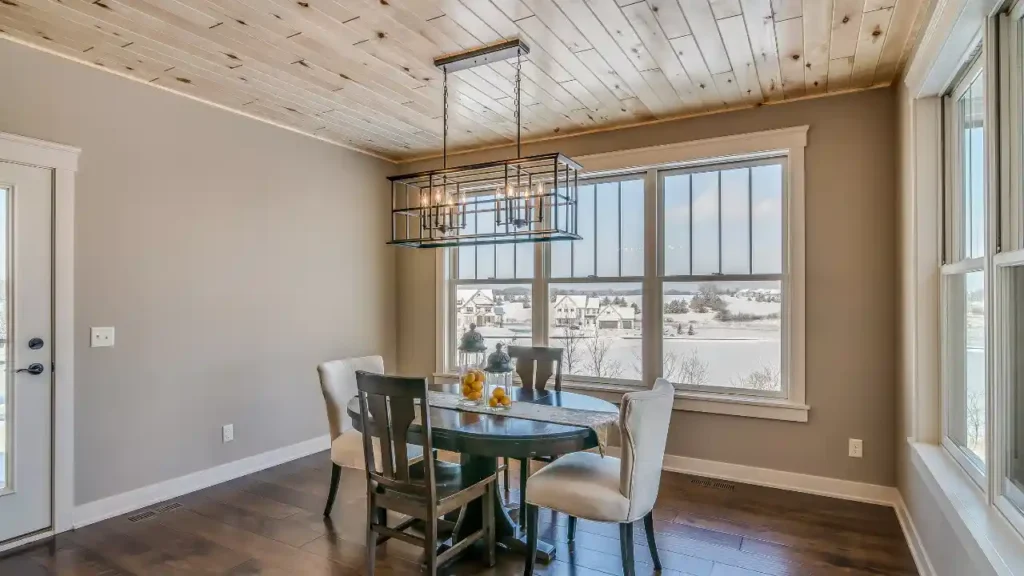
From round and narrow tables to drop-leaf and extendable designs, there are plenty of smart options available. In this guide, you will learn how to choose the right size and shape, compare space-saving designs, arrange seating, avoid common mistakes, and create a small dining area that feels comfortable rather than crowded.
What Is the Best Dining Table for Small Spaces?
The best dining table for small spaces is one that provides the seating and surface you need without interfering with movement around the room. There is no single table style that works for every compact home because the best choice depends on your room dimensions, layout, household size, and lifestyle.
For a very compact room, a round or drop-leaf table can be an excellent choice. A narrow rectangular table may work better in a long kitchen or dining area where the table needs to sit close to a wall. If you frequently have guests but need a compact everyday footprint, an extendable dining table can provide additional seating only when you need it.
Best Options at a Glance
| Table Type | Best For | Space-Saving Level | Typical Seating |
|---|---|---|---|
| Round table | Tight dining areas | High | 2–4 |
| Drop-leaf table | Flexible spaces | Very High | 2–4+ |
| Extendable table | Occasional guests | High | 2–6+ |
| Narrow rectangular table | Long, narrow rooms | High | 2–4 |
| Square table | Compact rooms | Medium–High | 2–4 |
| Folding table | Multifunctional rooms | Very High | 2–4+ |
Instead of automatically choosing the smallest table available, think about how you use your dining area every day. A slightly larger table that comfortably fits your needs can be a better investment than an extremely small table that becomes frustrating to use.
How to Choose a Dining Table for a Small Space
Choosing a compact dining table starts with the room rather than the furniture catalog. Before deciding on a style or finish, determine how much usable space you actually have.
Measure Your Available Floor Space
Measure the length and width of the area where the table will sit. Then consider everything around it, including:
- Walls
- Kitchen cabinets
- Doors
- Appliances
- Windows
- Walkways
- Other furniture
- Chair positions
Do not measure only the empty area where the tabletop will sit. You also need room for people to pull out chairs and move around the table comfortably.
For example, a table may physically fit between a wall and kitchen island, but if chairs cannot be pulled out without blocking a walkway, the arrangement will not be practical.
Leave Enough Space Around the Table
The space around the table is just as important as the table itself.
Think about how chairs will move when someone sits down. Also consider whether someone needs to walk behind a seated person, whether nearby cabinet doors need to open, and whether a dining chair will interfere with a doorway.
When measuring, place temporary objects or masking tape on the floor to represent the table and chair footprints. This simple step can give you a much better idea of how the finished arrangement will feel.
Choose the Right Table Size
The right size depends on how many people need to use the table regularly.
Dining Table for 2 People
If you live alone or with one other person, you do not necessarily need a traditional four-person dining table.
A small dining table for two can include:
- Compact round tables
- Bistro-style tables
- Narrow rectangular tables
- Small square tables
- Drop-leaf tables
- Wall-adjacent tables
A two-person table can be especially useful in studio apartments, small kitchens, and living spaces where the dining area serves multiple purposes.
A round tabletop can make a compact arrangement feel more relaxed, while a narrow rectangular table may make better use of a wall or corner.
Dining Table for 4 People
A four-person table is one of the most practical choices for many small households.
Consider:
- A compact round table
- A narrow rectangular table
- A small square table
- A drop-leaf design
- A compact extendable table
If four people eat together regularly, prioritize usable tabletop space rather than simply buying the smallest possible table.
Dining Table for 6 People
A permanent six-person table can be difficult to accommodate in a small room. If you only need six seats occasionally, an extendable table is usually more practical.
Keep the table in its compact configuration for everyday meals and expand it when guests arrive. This gives you additional capacity without forcing you to live with a large tabletop every day.
Which Table Shape Is Best for a Small Space?
Table shape can significantly affect how efficiently a dining area functions. The best table shape depends on the proportions and layout of your room.
Round Dining Tables
A round dining table is a popular option for compact rooms because it has no sharp corners and can make movement around the table feel easier.
Benefits include:
- No corners to navigate around
- Flexible seating
- Comfortable conversation
- Good circulation
- Soft visual appearance
- Suitable for many compact layouts
Round tables can work particularly well when the table needs to sit in the middle of a small dining area rather than directly against a wall.
Best Situations for a Round Table
A round dining table for small spaces can be especially useful in:
- Small apartments
- Square dining areas
- Kitchen corners
- Breakfast nooks
- Open-plan rooms
- Compact living-dining spaces
A pedestal base can make a round table even more practical because it removes some of the obstruction created by four traditional table legs.
Rectangular Dining Tables
Rectangular tables remain one of the most versatile choices for small homes.
Their biggest advantage is that they can often be positioned against a wall when only one side needs to be used. A narrow rectangular table can therefore take advantage of the room’s length without extending too far into the walkway.
Benefits include:
- Efficient wall placement
- Good use of long, narrow rooms
- Familiar seating arrangement
- Easy placement along kitchen walls
- Many available sizes and styles
When a Rectangular Table Makes More Sense
A rectangular table is often a strong choice when your dining area is long and narrow.
For example, a slim table placed parallel to a kitchen wall may provide four seats while leaving a more usable passage on the opposite side.
Square Dining Tables
Square tables can work well when the available dining area is relatively balanced in width and length.
They can provide comfortable seating for two to four people without requiring the length of a rectangular table.
However, a square table may not be the best option when the room is particularly narrow. Its depth can consume valuable floor space, so measure carefully before purchasing.
Oval Dining Tables
Oval tables combine some characteristics of round and rectangular designs.
The elongated shape can provide useful tabletop space while the curved ends eliminate sharp corners. An oval table can therefore work well in rooms where a rectangular table is suitable but a softer visual shape is preferred.
Best Space-Saving Dining Table Designs
The table’s construction can be just as important as its shape. Several designs are specifically useful when floor space is limited.
Drop-Leaf Dining Tables
A drop-leaf dining table has hinged sections that can be lowered when you need less surface area.
You might keep both leaves down for everyday use and raise one or both when additional dining space is needed.
This makes the design particularly useful for:
- Small apartments
- Kitchen dining areas
- Studio homes
- Multifunctional rooms
- Occasional entertaining
Before buying, check how stable the table is when the leaves are raised and whether there is enough clearance for the supporting mechanism.
Extendable Dining Tables
An extendable dining table provides a compact everyday footprint with additional surface area when required.
There are several extension mechanisms, including center extensions, butterfly leaves, and other integrated systems.
When shopping, check:
- Closed dimensions
- Fully extended dimensions
- Extension storage
- Ease of operation
- Stability
- Seating capacity in both configurations
For households that occasionally host friends or family, an extendable dining table for small apartments can offer an excellent balance between everyday space and occasional capacity.
Folding Dining Tables
A folding dining table is useful when the dining area needs to perform more than one function.
Depending on the design, the table may fold down partially or completely and can sometimes be moved into storage when not being used.
This can be particularly helpful in:
- Studio apartments
- Home offices
- Small kitchens
- Multifunctional rooms
- Rental homes
Narrow Dining Tables
A narrow dining table can be more practical than simply choosing a smaller standard table.
If your room is long but lacks depth, reducing the table’s width while maintaining useful length can create a much better layout.
Look for a design that provides enough elbow room without unnecessarily extending into the walkway.
Wall-Mounted or Fold-Down Tables
Wall-mounted dining tables are among the most space-efficient solutions for extremely compact rooms.
When folded down, the table provides a usable dining surface. When folded away, it can leave much of the floor open.
These tables are especially suitable for:
- Tiny kitchens
- Studio apartments
- Compact breakfast areas
- Multifunctional rooms
Installation requirements should be checked carefully, particularly if the wall needs to support the table and the weight placed on it.
Pedestal Dining Tables
A pedestal dining table uses a central support rather than four corner legs.
This can make it easier to position chairs around the table because there are fewer legs competing for foot and knee space.
For a small dining area, a pedestal base can also create a visually cleaner appearance.
Dining Table Ideas for Small Apartments
Small apartments often require furniture to perform multiple jobs. Your dining table might also become a workspace, homework station, crafting surface, or place for entertaining.
Create a Dining Nook
A dining nook can turn an otherwise unused corner into a functional eating area.
Look at:
- Empty kitchen corners
- Window areas
- Underused wall sections
- Breakfast nooks
- Spaces beside a kitchen island
A small round table paired with compact chairs can create an attractive dining nook without dominating the room.
Place the Table Against a Wall
If the table does not need to be accessible from all four sides, positioning it near a wall can free valuable floor space.
A narrow rectangular table or drop-leaf table can work particularly well for this setup.
For everyday use, you might keep only the necessary number of chairs around the accessible sides and pull the table away from the wall when additional seating is needed.
Use a Bench Instead of Multiple Chairs
A dining bench can be an excellent space-saving solution because it can often slide completely underneath the tabletop.
Benefits include:
- Efficient use of floor space
- Flexible seating
- Easy storage underneath the table
- Clean visual appearance
- Useful seating for families
A bench can also make a compact dining area feel less visually crowded than several individual chairs.
Choose a Table With Built-In Storage
If storage is limited, consider a dining table that incorporates useful storage.
Possible features include:
- Drawers
- Shelves
- Storage compartments
- Hidden extension storage
- Built-in racks
However, do not choose storage features at the expense of comfortable legroom. A clever-looking table is only useful if people can actually sit comfortably around it.
Best Dining Tables for Small Kitchens
A kitchen dining area needs special attention because it has to coexist with cabinets, appliances, food-preparation zones, and everyday traffic.
Small Kitchen Table Ideas
Several designs can work particularly well:
Narrow tables: Ideal for kitchens with limited depth.
Round pedestal tables: Useful where circulation around the table matters.
Breakfast tables: A compact option for casual daily meals.
Drop-leaf designs: Useful when you need more surface only occasionally.
Counter-height tables: Can work well in certain kitchen layouts, provided the height matches suitable seating.
Kitchen islands with dining overhangs: A practical way to combine food preparation and dining when the layout allows it.
The most important consideration is traffic flow. A beautiful table that blocks the refrigerator, oven, cabinet doors, or primary walkway will quickly become inconvenient.
How to Make a Small Dining Area Feel Bigger
You cannot physically increase the floor area with decorating alone, but you can make the room feel more open and visually organized.
Choose Light Visual Materials
Furniture with a lightweight appearance can help prevent a compact room from feeling visually crowded.
Consider:
- Light wood
- Glass
- Slim metal frames
- Open bases
- Minimal silhouettes
This does not mean every small room needs white furniture. The goal is to avoid unnecessary visual bulk.
Use a Glass or Visually Lightweight Table
A glass tabletop can allow more of the surrounding floor and room to remain visually visible.
Similarly, a slim tabletop with a simple base can create a lighter appearance than a thick, heavily detailed dining table.
The benefit is primarily visual rather than an actual increase in floor space.
Choose Slim Dining Chairs
Chairs can consume almost as much space as the table itself.
Instead of oversized dining chairs with large arms and thick upholstery, consider slim armless chairs that can be pushed completely underneath the table.
Always check the chair width and depth before buying. A narrow table paired with oversized chairs can still create a crowded dining area.
Match the Table to the Room
A cohesive color and material palette can make a small dining area look more organized.
For example, a light oak table with similarly toned chairs can create a unified appearance. In a modern room, a simple wood-and-metal combination may provide contrast without excessive visual complexity.
Use Mirrors and Proper Lighting
A well-positioned mirror can reflect light and make a compact dining area feel brighter.
Lighting also matters. A pendant fixture positioned above the table can define the dining zone without requiring additional floor space.
Natural light should also be kept as unobstructed as possible.
Dining Table and Chair Pairing for Small Spaces
Choosing the right table is only half the job. The wrong chairs can make an otherwise efficient dining arrangement feel cramped.
Armless Dining Chairs
Armless chairs generally have a smaller visual footprint and can be easier to tuck beneath the table.
They are especially useful when the dining area also functions as a walkway.
Stackable Dining Chairs
Stackable chairs can be stored vertically when they are not required.
This is useful if you regularly need extra seating but do not have enough space to keep every chair around the table.
Folding Dining Chairs
Folding chairs can provide occasional seating without permanently occupying valuable floor space.
They can be stored in a closet, utility area, or other suitable location when guests are not present.
Dining Benches
Benches can accommodate multiple people while allowing the seating to slide under the table.
They are particularly effective with rectangular and square dining tables.
Chairs That Fully Tuck Under the Table
Before purchasing chairs, measure their height and depth.
The ideal arrangement allows the chairs to slide sufficiently underneath the table without interfering with the table’s legs, apron, drawers, or pedestal.
This small detail can make a noticeable difference in a compact room.
Round vs. Rectangular Dining Tables for Small Spaces
Both shapes can work well, but each has different strengths.
| Feature | Round Table | Rectangular Table |
|---|---|---|
| Best room shape | Square or compact | Narrow or long |
| Circulation | Excellent | Good |
| Wall placement | Less efficient | Excellent |
| Seating flexibility | High | High |
| Visual footprint | Softer | More structured |
| Best for | Tight central areas | Narrow dining zones |
Which One Should You Choose?
A round dining table is often a better choice when the table sits in the middle of a compact area and you want easier movement around it.
A rectangular table can be more practical when the available space is long and narrow or when you want to position the table against a wall.
Neither shape is universally better. The best choice is the one that works with your room’s actual dimensions and traffic pattern.
How Much Space Do You Need Around a Dining Table?
The amount of space you need around a dining table depends on the room’s layout and how the surrounding area is used.
As a practical starting point, allow roughly 36 inches of clearance around the table where chairs need to be pulled out and people need to move through the area. A busier walkway may benefit from more space.
You should also consider:
- Chair depth
- Chair pull-out movement
- Walking paths
- Kitchen cabinet doors
- Appliance doors
- Room entrances
- Nearby furniture
For example, if one side of the table sits against a wall and does not need regular chair access, that side can be treated differently from a major walkway.
The safest approach is to test the arrangement with painter’s tape on the floor before buying the table.
Common Mistakes When Choosing a Dining Table for Small Spaces
A small dining room does not necessarily require a tiny table. It requires a table that is correctly proportioned for the space.
Buying Based Only on Tabletop Dimensions
A tabletop may fit perfectly on paper while the chairs and people around it do not.
Always consider the complete footprint.
Ignoring Chair Clearance
Do not forget that chairs need space to move backward.
Measure the table together with the seating rather than treating them as separate purchases.
Choosing a Table That Is Too Heavy Visually
Thick tops, oversized bases, bulky legs, and large chairs can make a compact room feel crowded.
A streamlined design can often provide a more balanced appearance.
Forgetting About Doors and Walkways
Kitchen cabinets, refrigerators, ovens, and doors need clearance.
A dining table should never make an important everyday pathway unnecessarily difficult to use.
Buying More Seating Than You Actually Need
If two people use the table every day and you only host larger gatherings a few times a year, a permanent six-seat arrangement may waste valuable space.
An extendable or folding solution can be more practical.
Choosing Style Over Function
A beautiful dining table is not a good choice if it is uncomfortable, unstable, difficult to clean, or impossible to move around.
Prioritize the way the table works before making the final style decision.
Forgetting Extension Mechanisms or Storage Requirements
For extendable tables, check where the extension leaves are stored and how much space the table requires when fully opened.
The compact size is only part of the equation.
How to Style a Small Dining Area
A small dining area can still have plenty of personality. The key is to use a few intentional details instead of filling every available surface.
Keep the Tabletop Simple
Avoid excessive decor that reduces usable dining space.
A small vase, bowl, candle arrangement, or simple centerpiece may be enough.
Choose One Statement Light Fixture
A pendant light above the dining table can establish a focal point while keeping the floor completely clear.
Choose a fixture that is appropriately scaled to the table and does not interfere with people’s view across the table.
Add a Small Centerpiece
Keep centerpieces low and compact.
The goal is to add personality without forcing diners to move decorations every time they sit down.
Use a Wall-Mounted Mirror or Artwork
A mirror can reflect light, while artwork can give the dining area a distinct identity.
Wall-mounted decor is particularly useful because it does not take up tabletop or floor space.
Coordinate Wood, Metal, and Upholstery Finishes
Choose a limited number of finishes and repeat them throughout the dining area.
For example, the wood tone of the table could complement nearby shelving or flooring, while chair frames could coordinate with lighting or hardware.
Avoid Excessive Decorative Clutter
In a small dining room, empty visual space is valuable.
A few carefully selected accessories will usually create a more sophisticated result than many small decorative objects.
Best Materials for Small-Space Dining Tables
Material affects durability, maintenance, appearance, and visual weight.
Solid Wood
Solid wood offers a warm, timeless appearance and can work with many interior styles.
Oak, walnut, maple, and other wood species can create very different looks.
For small rooms, consider a design with a relatively slim profile rather than a very bulky construction.
Engineered Wood
Engineered wood can offer a wide range of styles and finishes, often at a more accessible price point.
The quality varies between products, so check the construction, surface finish, edge treatment, and manufacturer specifications before buying.
Glass
Glass can make a dining area appear visually lighter because more of the room remains visible through and around the tabletop.
However, fingerprints, spills, and scratches may be more noticeable, so maintenance should be considered.
Metal
Metal tables or tables with metal frames can provide a slim, contemporary appearance.
Powder-coated or finished metal can work particularly well in modern and industrial-inspired interiors.
Wood-and-Metal Combinations
Wood-and-metal dining tables offer a useful balance between warmth and modern structure.
A slim metal base combined with a relatively thin wood tabletop can create a streamlined look that works well in compact apartments.
Dining Table for Small Spaces: What to Look for Before Buying
Before purchasing a dining table, use this checklist:
- Measure the available floor area.
- Determine how many people need seats every day.
- Consider how often you host guests.
- Decide whether the table will serve multiple purposes.
- Choose a shape that suits your room.
- Check the tabletop dimensions.
- Check the overall table height.
- Measure the chairs you plan to use.
- Confirm sufficient chair clearance.
- Check nearby doors and cabinets.
- Consider whether storage is useful.
- Check the extension mechanism on expandable designs.
- Verify the table’s weight and construction.
- Choose a finish appropriate for your lifestyle.
- Consider how easy the surface is to clean.
- Match the table’s visual weight to the room.
- Think about whether the table will still work if your needs change.
Frequently Asked Questions
What is the best dining table shape for a small space?
The best shape depends on the room. Round tables are often excellent for compact central areas because they have no corners and can make circulation easier. Narrow rectangular tables are often better for long rooms or layouts where the table needs to sit against a wall.
What size dining table is best for a small apartment?
The best size is the smallest table that comfortably accommodates your regular household while leaving adequate room for chairs and movement. A compact table for two to four people is often practical, while an extendable model can provide additional capacity when guests visit.
Is a round or rectangular table better for a small room?
A round table can work better in a compact room where circulation around the table is important. A rectangular table can be more efficient in a narrow room because it can sit close to a wall. Your room dimensions should determine the choice.
How many people can sit at a small dining table?
A compact dining table can typically accommodate two to four people, depending on its dimensions and the chair sizes. Extendable tables can accommodate more people when additional surface area is needed.
Are extendable dining tables good for small spaces?
Yes. An extendable dining table can be particularly useful when you need a compact table for everyday meals but occasionally host additional guests. Keep it closed most of the time and expand it when necessary.
Are round tables more space-efficient?
Round tables can be space-efficient in certain layouts because they eliminate corners and can make movement around the table easier. However, a narrow rectangular table may use floor space more effectively when positioned against a wall.
What type of dining table is best for a small kitchen?
Narrow rectangular, round pedestal, drop-leaf, and compact folding tables can all work well in small kitchens. The best option depends on the kitchen’s layout, cabinet clearance, and traffic flow.
How much space should be left around a dining table?
A practical starting point is around 36 inches of clearance where chairs need to be pulled out and people need to pass. More space may be necessary in a major walkway, while a wall side that does not require chair access can be handled differently.
Can a dining table fit in a small living room?
Yes. A compact dining table can fit into a small living room when the layout is carefully planned. Round tables, narrow rectangular tables, drop-leaf designs, and multifunctional tables can be particularly useful.
Final Thoughts
Finding the right dining table for small spaces is less about buying the smallest possible piece of furniture and more about choosing a design that works with the room.
Choose a round table when flexible circulation and a compact central arrangement are priorities. Choose a narrow rectangular table when you have a long room or want to position the table near a wall. A drop-leaf table is ideal when you need maximum flexibility, while an extendable dining table can provide extra seating without taking up additional everyday space.
For extremely compact homes, folding or wall-mounted tables can free up valuable floor area. Pairing your table with slim, armless, stackable, folding chairs, or a bench can further improve the layout.
Most importantly, measure the complete arrangement before buying. Consider the tabletop, chairs, walking paths, doors, cabinets, and everyday traffic. When size, shape, functionality, and style work together, even a small dining area can feel comfortable, practical, and beautifully designed.
