
Can a Sectional Work in a Small Living Room?
Finding the best sectional for small living room spaces can feel difficult. Many people assume that a sectional sofa automatically belongs in a large house or spacious open-plan living room.
That is not always true.
A sectional can actually be a smart choice for a compact living room when its footprint matches the room. One properly sized sectional may provide the seating you need while eliminating the need for multiple sofas and chairs.
The key is not simply choosing the smallest sectional available. You need to consider the entire footprint, including the sofa width, chaise projection, overall depth, arm size, room shape, door locations, and walking paths.
A sectional that is too large can block movement and make a room feel crowded. However, a compact sectional placed correctly can use a corner efficiently and create a comfortable seating zone.
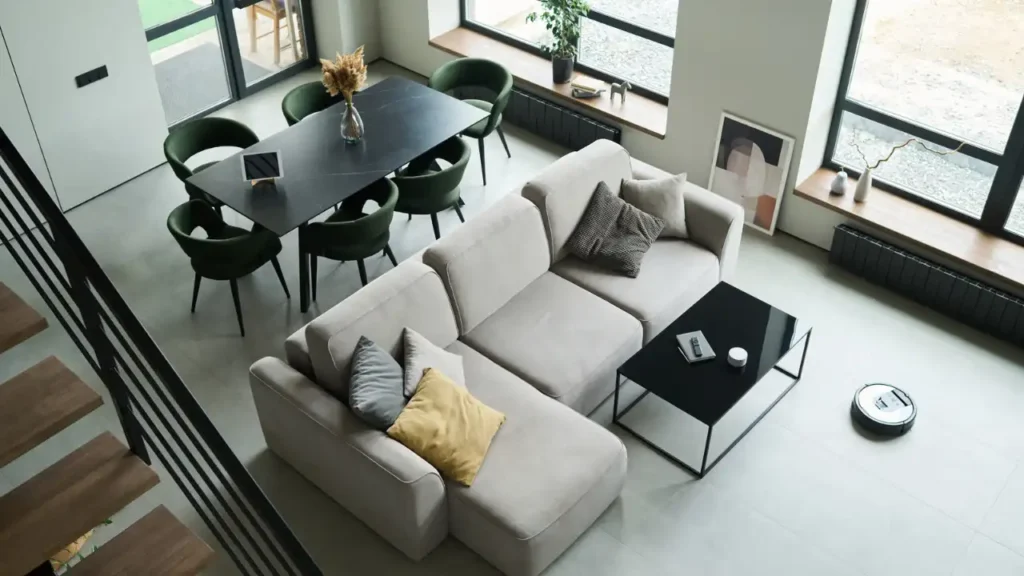
This guide explains how to choose the right sectional size, which sectional styles work best in small spaces, how to measure your room, and how to create a layout that feels comfortable rather than overcrowded.
What Is the Best Sectional for a Small Living Room?
For many homes, the best sectional for a small living room is a compact L-shaped sectional, reversible chaise sectional, or modular sectional.
The best choice usually has several characteristics:
- A footprint that matches the room dimensions
- Slim or moderately sized arms
- A chaise that does not block the main walkway
- Comfortable but not excessively deep seating
- A visually light design
- Flexible seating options
- A practical chaise direction
- Durable upholstery suited to everyday use
A compact sectional does not necessarily need to be extremely small. The goal is to provide enough seating without consuming the entire room.
Before buying, consider the sectional as a complete footprint rather than looking only at its overall width.
For example, two sectionals may have similar widths, but one may have a much deeper chaise. That additional chaise projection can dramatically affect how much open floor space remains.
The best approach is to measure your room and visualize the entire sectional footprint before making a purchase.
What Size Sectional Is Best for a Small Living Room?
There is no single sectional size that works perfectly for every small living room.
A compact sectional that works beautifully in a square apartment may feel oversized in a narrow room with several doorways.
Instead of starting with a specific sofa measurement, start by measuring your available space.
Measure the Main Wall
Begin with the wall or area where you expect the sectional to sit.
Measure:
- Total wall length
- Door locations
- Window locations
- Heating units
- Built-in storage
- Electrical outlets
- Nearby pathways
Do not assume that the entire wall is usable.
A doorway, window, or storage cabinet may reduce the amount of space available for the sectional.
Measure the Chaise Depth
The chaise is one of the most important measurements when buying a sectional.
Many shoppers focus on the overall width but forget that the chaise extends significantly into the room.
Measure the available distance from the wall to the opposite furniture or walking path.
Then compare that measurement with the sectional’s full chaise projection.
Remember to leave room for:
- Coffee tables
- Foot traffic
- Access to doors
- Storage furniture
- Comfortable movement
A sectional may technically fit inside a room while still making the space difficult to use.
Consider Overall Sectional Width
A compact sectional should provide enough seating without dominating the room.
Rather than choosing based on a universal width, compare the sectional dimensions with your room layout.
A small square room may accommodate a wider sectional positioned in a corner. A narrow room may require a shorter sofa section and a carefully sized chaise.
The best sectional is one that feels proportionate to the available floor space.
Check Sofa Depth
Depth matters almost as much as width.
Very deep lounge-style sectionals can be comfortable, but they may consume valuable floor space.
In a compact room, consider whether you truly need extra-deep seating.
A moderately deep sectional may provide excellent comfort while preserving better circulation.
Leave Room for Movement
The living room should remain easy to move through.
Plan for:
- Entry paths
- Routes between rooms
- Access to windows
- Access to storage
- Space around a coffee table
- Comfortable movement around the seating area
A room feels more functional when furniture supports movement rather than forcing people to walk around obstacles.
Small Sectional Sofa Size Guide
| Sectional Type | Best For | Space Efficiency | Seating | Flexibility |
|---|---|---|---|---|
| Compact L-Shaped Sectional | Small living rooms | High | 3–4 | Medium |
| Reversible Chaise Sectional | Apartments | High | 3–4 | High |
| Modular Sectional | Flexible spaces | Excellent | Varies | Excellent |
| Corner Sectional | Open compact rooms | High | 3–5 | Medium |
| Sleeper Sectional | Multipurpose rooms | High | 3–4 | Medium |
| Storage Sectional | Small homes | Excellent | 3–4 | High |
This table should be used as a starting point rather than a strict buying rule.
Room shape and circulation are often more important than the sectional category alone.
Best Sectional Types for Small Living Rooms
Compact L-Shaped Sectional
A compact L-shaped sectional is one of the most practical choices for many small living rooms.
It can:
- Use a corner efficiently
- Provide seating for several people
- Define the living area
- Reduce the need for multiple seating pieces
The most important factor is keeping the L-shape proportional to the room.
Avoid choosing a sectional simply because it offers the most seats. A slightly smaller sectional with good circulation can make the room more comfortable.
Reversible Chaise Sectional
A reversible chaise sectional can be especially useful in apartments and rental homes.
The chaise can often be placed on either side of the sofa.
This flexibility is useful when:
- Moving to a new home
- Changing the room layout
- Rearranging furniture
- Working with different room shapes
A fixed-chaise sectional may work perfectly in your current home but become difficult to use after moving.
For people who expect to rearrange frequently, a reversible design can provide better long-term flexibility.
Modular Sectional
Modular sectionals are made from separate pieces that can be rearranged.
They can be useful for small spaces because the layout can adapt.
Possible configurations may include:
- Straight sofa
- L-shape
- Chaise configuration
- Separate seating pieces
A modular sectional can also be useful for apartments because individual pieces may be easier to move through doorways and hallways.
However, not every modular sectional is automatically compact. Always measure the total configuration you plan to use.
Small Corner Sectional
A corner sectional can efficiently use an area that might otherwise remain empty.
This option often works well in:
- Square living rooms
- Open-plan apartments
- Compact homes with one clear seating corner
The sectional can anchor the living area while leaving the center of the room more open.
Sleeper Sectional
A sleeper sectional can provide two functions:
- Everyday seating
- Guest sleeping space
This makes it useful for:
- Studio apartments
- Small homes
- Multipurpose living rooms
- Homes without a dedicated guest room
Before purchasing, check the additional space needed when the bed is open.
A sleeper sofa that fits perfectly when closed may require much more clearance when converted into a bed.
Storage Sectional
Storage features can be extremely useful in a small home.
Depending on the design, hidden storage may hold:
- Blankets
- Pillows
- Toys
- Seasonal items
- Extra cushions
Multifunctional furniture can reduce the need for additional storage pieces.
Can a Sectional Make a Small Living Room Look Bigger?
A sectional can make a small living room feel either more organized or more crowded.
The difference usually comes down to proportion.
Choose One Properly Sized Anchor
Instead of filling the room with several separate seating pieces, one appropriately sized sectional can create a clear focal point.
This can make the furniture arrangement feel more intentional.
Avoid Multiple Large Seating Pieces
A sectional combined with another large sofa may overwhelm a compact room.
Consider whether you really need:
- A second sofa
- Multiple armchairs
- Large side chairs
Sometimes one sectional plus a flexible ottoman or compact accent chair is enough.
Keep the Center Open
Open floor space helps improve movement and visual balance.
Avoid placing unnecessary furniture directly in the center of a small room.
Choose Raised Legs
A sectional with visible legs allows more of the floor to remain visible.
This can create a visually lighter appearance compared with a bulky sofa that sits directly on the floor.
Consider Slim Arms
Large padded arms can consume a surprising amount of space.
Slim-arm sectionals may provide more usable seating while reducing visual bulk.
Choose a Lower Visual Profile
Lower-profile furniture can sometimes make a room feel more open by preserving visible wall space above the sofa.
However, comfort should remain important.
Do not choose an uncomfortable sectional simply because it looks visually lighter.
Best Sectional for a Tiny Living Room
Tiny living rooms require especially careful planning.
The best approach is usually to prioritize one seating solution rather than filling the room with multiple small pieces.
Choose a Compact Two- or Three-Piece Design
Look for sectionals designed specifically for apartments or compact spaces.
Pay attention to the entire footprint.
Avoid Extra-Wide Arms
Wide arms increase the total size of the sofa without necessarily improving seating capacity.
Choose a Shorter Chaise
A shorter chaise may preserve better circulation.
Consider a Reversible Chaise
A reversible design gives you more options if the room layout changes.
Use an Ottoman Instead of Extra Chairs
A compact ottoman can provide:
- Extra seating
- A footrest
- Flexible placement
- Coffee-table functionality
It can often be moved when additional floor space is needed.
Avoid Adding Too Much Seating
A common mistake is assuming that a small room needs many small seating pieces.
In reality, several chairs, stools, and side tables can create visual clutter.
One well-proportioned sectional may be the better solution.
Best Sectional for a Small Apartment
Apartment living introduces additional challenges beyond room size.
Measure Doorways and Hallways
Before ordering, measure:
- Apartment entrance
- Hallways
- Elevators
- Staircases
- Tight corners
A sectional that fits perfectly inside the living room may still be difficult to deliver.
Consider Modular Delivery
Sectionals delivered in separate pieces can be easier to move through narrow spaces.
Choose a Flexible Chaise
Apartment layouts vary, and a reversible chaise can provide more flexibility.
Prioritize Multifunctional Features
Small apartments often benefit from furniture with multiple functions.
Consider:
- Storage
- Sleeper features
- Modular sections
- Movable ottomans
Think About Future Moves
If you expect to move, avoid buying a sectional that works only in one very specific room layout.
Flexible furniture can provide better long-term value.
Best Sectional Layout Ideas for Small Living Rooms
Sectional Against the Wall
This layout works well for many narrow or traditional living rooms.
Benefits include:
- Simple furniture placement
- Clear center space
- Easier circulation
However, pushing furniture against a wall is not always the best solution for every room.
Corner Sectional Layout
Placing the sectional in a corner can efficiently define the seating zone.
This layout can work particularly well in:
- Square rooms
- Open apartments
- Living rooms with one unused corner
Floating Sectional Layout
In open-concept spaces, a sectional can float away from the wall.
The back of the sectional can help separate:
- Living areas
- Dining areas
- Home offices
This approach requires enough room behind the sectional for comfortable circulation.
Sectional With an Ottoman
An ottoman is one of the most flexible companions for a sectional.
It can serve as:
- Extra seating
- Foot support
- A coffee table
- A movable surface
Choose a size that does not block movement.
Sectional and One Accent Chair
If you need additional seating, one compact accent chair may work better than another large sofa.
This creates flexibility without overwhelming the room.
How to Measure a Small Living Room for a Sectional
Measure Room Length and Width
Start with the complete room dimensions.
Write the measurements down.
Mark Doors and Windows
Identify areas that must remain accessible.
Measure the Main Wall
Determine how much wall space is genuinely available.
Measure Chaise Projection
This measurement is essential.
Compare the chaise projection with the remaining open floor space.
Plan Walking Paths
Think about how people enter and move through the room.
Mark the Sectional Footprint With Tape
Painter’s tape can be used to outline the sectional footprint on the floor.
Mark:
- Overall width
- Overall depth
- Chaise projection
- Coffee table position
Then walk around the outline.
This simple test can reveal whether the sectional leaves enough room for everyday movement.
Best Sectional Colors for a Small Living Room
Color can affect the visual weight of a sectional.
Light Neutral Colors
Popular options include:
- Cream
- Beige
- Taupe
- Soft gray
Light neutrals can blend easily with different wall colors and decor.
Warm Earth Tones
Consider:
- Warm brown
- Olive
- Clay
- Caramel
Earth tones can add warmth without requiring excessive decorative accessories.
Dark Sectionals
Dark colors can still work in small living rooms.
Balance them with:
- Light walls
- Good lighting
- Open floor space
- A properly sized rug
- Lighter surrounding furniture
A dark sectional is not automatically too heavy for a small room.
The overall balance of the room matters more.
Patterned Sectionals
Patterns can add personality, but large busy patterns may become visually dominant.
If you choose a patterned sectional, keep surrounding furniture relatively simple.
Best Materials for Small Sectional Sofas
Performance Fabric
Performance fabrics can be practical for busy households.
Consider:
- Cleaning requirements
- Stain resistance
- Durability
- Everyday comfort
Linen-Blend Upholstery
Linen-blend fabrics can create a relaxed and natural appearance.
However, check the care requirements before buying.
Velvet
Velvet can add:
- Texture
- Depth
- A luxurious appearance
It can work particularly well when the rest of the room is simple.
Leather
Leather can be durable and easy to wipe clean.
However, consider:
- Temperature
- Cushion comfort
- Color
- Overall visual weight
Textured Fabrics
Textured upholstery can add visual interest without requiring excessive decor.
Removable and Washable Covers
For homes with children or pets, removable covers can be a valuable feature.
Best Sectional for Small Living Rooms With Kids or Pets
Lifestyle should strongly influence your choice.
Choose Durable Upholstery
Look for materials suited to everyday use.
Look for Easy-Clean Materials
Consider how easily spills and marks can be cleaned.
Consider Removable Covers
This can simplify maintenance.
Check Cushion Construction
Consider whether cushions are:
- Attached
- Removable
- Reversible
- Replaceable
Avoid Materials That Show Wear Easily
The best-looking fabric may not always be the best choice for an active household.
Consider Storage Features
Hidden storage can help organize:
- Toys
- Blankets
- Games
- Extra pillows
Multifunctional Sectional Ideas for Small Spaces
Sleeper Sectionals
Useful for overnight guests.
Storage Sectionals
Useful for reducing clutter.
Modular Sectionals
Useful for changing layouts.
Sectionals With Movable Ottomans
Useful for flexible seating arrangements.
Reversible Chaise Designs
Useful when room layouts change.
The most practical furniture for small homes often performs more than one function.
Best Sectional for Small Living Room by Budget
Budget-Friendly Sectionals
Look for:
- Compact fixed designs
- Simple upholstery
- Reversible chaise models
- Quality secondhand furniture
When buying on a budget, prioritize correct size and a sturdy structure over unnecessary decorative features.
Mid-Range Sectionals
Mid-range options may offer:
- Better cushion construction
- More durable upholstery
- Performance fabrics
- Modular flexibility
This category can offer a good balance between comfort and durability.
Premium Sectionals
Higher-budget options may include:
- Custom configurations
- High-quality frames
- Premium upholstery
- Replaceable components
- Long-term warranties
A premium sectional can make sense when the furniture will be used heavily for many years.
How to Choose the Best Sectional Before Buying
Measure Before Shopping
Do not rely on photos.
Measure the room first.
Identify Your Seating Needs
Ask yourself:
- How many people use the sectional daily?
- Do you entertain often?
- Do guests sleep over?
- Do you prefer upright or deep lounging?
- Do you need storage?
Choose the Right Chaise Direction
Think about room entry points and walking paths.
The chaise should not block the natural route through the room.
Consider Sofa Depth
Deep seating may feel luxurious but can reduce usable floor space.
Check Delivery Access
Measure the entire delivery route.
Test Comfort
Whenever possible, sit on the sectional before buying.
Consider:
- Seat depth
- Seat height
- Back support
- Cushion firmness
- Arm comfort
Check Frame Quality
A sectional should have a structure designed for regular use.
Consider Cushion Durability
Cushions affect both comfort and long-term appearance.
Think About Long-Term Flexibility
Your living situation may change.
Modular or reversible designs can adapt more easily.
Common Mistakes When Buying a Sectional for a Small Living Room
Avoid these common mistakes:
Buying Before Measuring
Never assume a sectional will fit because it looks compact online.
Choosing Based Only on Photos
Photos can make furniture appear smaller than it really is.
Ignoring Chaise Depth
This is one of the biggest mistakes.
Blocking Doorways
Always preserve access.
Forgetting Delivery Access
Measure hallways, doors, stairs, and elevators.
Buying an Oversized Sectional
More seating is not always better.
Filling Every Corner With Furniture
Small rooms need breathing space.
Ignoring Walking Paths
Furniture should support movement.
Choosing Appearance Over Comfort
A sectional is usually used daily.
Comfort matters.
Choosing a Fixed Chaise Without Planning
A reversible option may offer more flexibility.
Forgetting Storage Needs
A storage sectional may eliminate the need for another cabinet.
Compact Sofa vs Sectional for a Small Living Room
| Furniture Type | Best For | Seating | Space Saving | Flexibility |
|---|---|---|---|---|
| Loveseat | Tiny rooms | 2 | Excellent | High |
| Compact Straight Sofa | Most small rooms | 2–3 | Excellent | High |
| Small Sectional | Corner layouts | 3–4 | High | Medium |
| Modular Sectional | Flexible spaces | Varies | High | Excellent |
| Sleeper Sectional | Multipurpose rooms | 3–4 | High | High |
A compact straight sofa is often the safest choice for a narrow or difficult room.
A sectional may be the better choice when you need more seating and have a usable corner.
Best Sectional for Different Small Living Room Shapes
Narrow Living Room
Choose a sectional with a compact depth and avoid a chaise that blocks the main path.
Square Living Room
A corner sectional may work well by defining the seating area.
Studio Apartment
Consider:
- Sleeper functionality
- Modular designs
- Storage
- Reversible chaises
Open-Concept Apartment
A floating sectional can help define the living zone.
Small Rental Home
Flexible and reversible furniture can adapt to future moves.
Small Family Living Room
Prioritize:
- Durable upholstery
- Comfortable seating
- Easy cleaning
- Storage
Living Room With Multiple Doorways
A compact straight sofa or carefully placed sectional may work better than a large L-shape.
How to Make a Small Living Room Feel Bigger With a Sectional
A sectional should support the room rather than dominate it.
Try these strategies:
- Choose the correct scale
- Keep main pathways open
- Consider raised-leg designs
- Avoid overly bulky arms
- Keep windows unobstructed
- Use appropriate lighting
- Avoid unnecessary furniture
- Use vertical storage
- Choose a properly sized rug
- Keep surfaces organized
The goal is not to make the room look empty.
The goal is to make every piece feel intentional.
Sectional Features Worth Looking For
Reversible Chaise
Provides layout flexibility.
Modular Pieces
Allows future reconfiguration.
Storage Compartments
Useful in compact homes.
Removable Covers
Helpful for cleaning.
Durable Cushions
Important for long-term comfort.
Slim Arms
Can reduce unnecessary bulk.
Raised Legs
Can create a visually lighter appearance.
Easy Assembly
Useful for apartments and future moves.
Before-and-After Small Living Room Sectional Ideas
When publishing this article, original examples can make the page more useful.
Multiple Chairs to One Compact Sectional
Show how replacing several mismatched seating pieces with one appropriately sized sectional improves organization.
Oversized Sofa to Apartment-Size Sectional
Compare the available walking space before and after.
Wrong Chaise Direction to Better Room Flow
Demonstrate how reversing the chaise can improve circulation.
Cluttered Room to Functional Corner Layout
Show how better furniture placement creates open space.
Basic Living Room to Flexible Modular Space
Show how modular pieces can adapt to changing needs.
For stronger original value, add:
- Actual room measurements
- Before-and-after photographs
- Sectional dimensions
- Layout diagrams
- Real budgets
- Delivery experiences
- Comfort observations
This type of original, practical information can make a furniture guide more useful than a generic list of sofa styles. Google’s current guidance emphasizes helpful, reliable, people-first content, clear authorship and useful originality rather than content created primarily to manipulate rankings.
Related Topics to Link Internally
You can internally link to relevant articles using descriptive anchor text, such as:
- Small home furniture ideas
- Best sofa for small living room
- Curved sofa living room layout
- Modern furniture ideas
- Space-saving furniture ideas
- Cozy home furniture ideas
- Furniture trends 2026
- Bouclé accent chair styling ideas
- Mid-century modern accent chairs under $200
- High-end furniture look for less
Use internal links only where they genuinely help readers continue their research.
Frequently Asked Questions
What is the best sectional for a small living room?
The best option is usually a compact sectional that matches the room’s proportions and leaves clear walking paths. Reversible chaise and modular sectionals can be particularly useful because they offer more flexibility.
Can a sectional fit in a small living room?
Yes. A sectional can fit well when the overall footprint, chaise depth, and room circulation are carefully planned.
What size sectional is best for a small room?
There is no universal size. Measure the available wall space, chaise projection, doors, and walking paths before choosing.
Is a sectional better than a regular sofa for a small living room?
It depends on the room. A sectional can provide more seating while reducing the need for multiple chairs, but a compact straight sofa may work better in narrow spaces.
What type of sectional saves the most space?
Compact L-shaped, reversible chaise, and modular sectionals are often practical choices because they can use corners efficiently or adapt to different layouts.
Is a reversible chaise sectional good for a small room?
Yes. A reversible chaise can provide useful flexibility when rearranging furniture or moving to another home.
Are modular sectionals good for apartments?
They can be excellent because separate pieces are often easier to move and can be rearranged for different room layouts.
Can an L-shaped sofa make a small room look bigger?
A properly scaled L-shaped sofa can make a room feel more organized by defining the seating zone and reducing the need for additional furniture.
Should a sectional go against the wall?
Not always. Wall placement works well in many small rooms, but floating a sectional can help define zones in an open-concept space.
How much walking space should I leave around a sectional?
Leave enough space for people to move comfortably through the room and access doors, windows, and storage. The exact amount depends on the layout and room size.
What sectional color is best for a small living room?
Light neutrals are versatile, but dark or colorful sectionals can also work when the overall room has balanced lighting and open space.
Is a sleeper sectional worth buying for a small home?
It can be worth buying if the living room regularly doubles as a guest room. Check the open-bed dimensions before purchasing.
What is the best sectional for a studio apartment?
A compact sleeper, modular, or reversible chaise sectional can work well because it provides flexibility and multifunctional use.
Are raised-leg sectionals better for small spaces?
Raised legs can create a visually lighter appearance by keeping more floor visible.
How do I measure my room for a sectional?
Measure room length, width, available wall space, chaise projection, doorways, windows, and delivery access. Marking the sectional footprint with tape can help visualize the layout.
Conclusion: Choosing the Best Sectional for a Small Living Room
A sectional does not need to be reserved for large homes.
The right design can work extremely well in a compact living room when it matches the scale and shape of the space.
Before buying, measure more than the sofa width. Consider the chaise projection, overall depth, walking paths, doorways, windows, and delivery route.
Compact L-shaped sectionals can use corners efficiently. Reversible chaise designs provide flexibility. Modular sectionals can adapt when your room or lifestyle changes. Sleeper and storage sectionals can add extra functionality to a small home.
At the same time, no trend or feature is more important than everyday usability. A sectional should be comfortable, durable, and easy to live with.
The best sectional for small living room spaces is one that provides comfortable seating, fits the room’s proportions, preserves clear walking paths, and delivers the right balance of flexibility, style, and everyday functionality.
