
Small Home Office Furniture Ideas for a Stylish, Functional Workspace
A small home office does not need a large room or a massive desk to work well. With the right furniture, even a corner of a bedroom, living room, hallway, or apartment can become a comfortable and productive workspace.
The key is to choose furniture according to how you actually work rather than simply buying the smallest pieces available. A compact desk, comfortable chair, vertical storage, good lighting, and thoughtful cable management can make a surprisingly small office feel organized and practical.
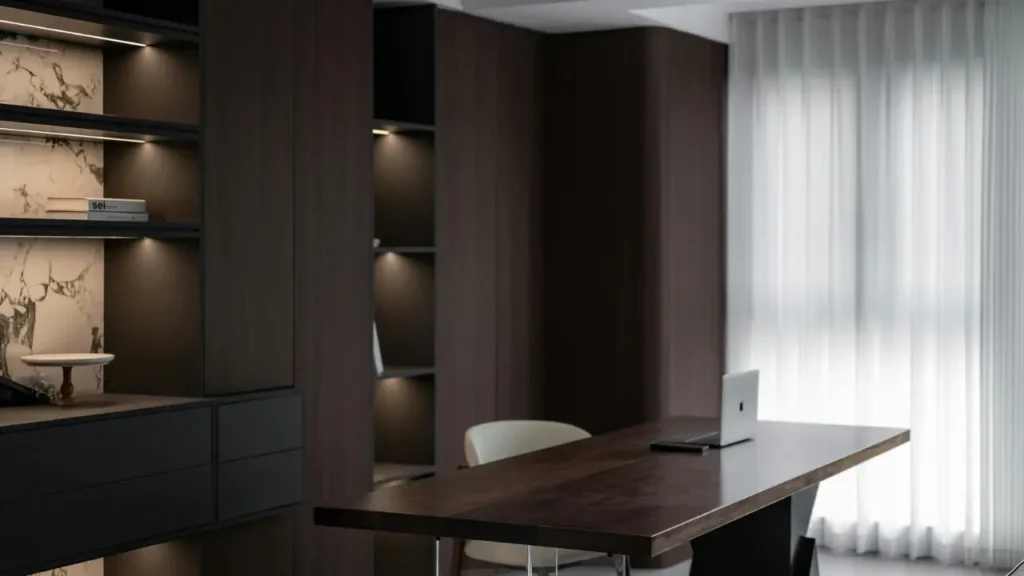
These small home office furniture ideas focus on making every inch useful while keeping the room comfortable and visually uncluttered.
How to Choose Furniture for a Small Home Office
Before buying anything, consider how the space will be used. A laptop-only workstation requires very different furniture from a setup with two monitors, a printer, paperwork, and extensive storage.
Measure the Room First
Measure the available wall, floor, and ceiling space before shopping. Record the locations of doors, windows, outlets, radiators, closets, and other features that could affect furniture placement.
Also measure the route into the room. A desk that fits perfectly against the wall is not useful if you cannot get it through the doorway.
Identify the Primary Work Zone
Decide exactly where you will work.
A small office might occupy:
- One bedroom wall
- A living room corner
- A hallway niche
- A closet
- A section of a guest room
- A dining-area corner
- A studio apartment
Once the work zone is defined, you can choose furniture around it rather than trying to squeeze furniture into an undefined area.
Choose Furniture Based on Your Work
Think about your daily equipment.
Do you need:
- A laptop only?
- One or two monitors?
- A printer?
- Files and paperwork?
- Books?
- Drawing equipment?
- Video-call equipment?
- Space for writing?
A narrow writing desk may be perfect for a laptop but frustrating if you regularly use two monitors.
Consider Storage Requirements
Do not buy storage simply because you have room for it.
First determine what needs to be stored. Then decide whether those items can go on a shelf, in a drawer, on a rolling cart, or inside a cabinet.
Leave Enough Clearance
Furniture needs operating space, not just floor space.
Make sure you have room to:
- Pull out your chair
- Open drawers
- Open cabinet doors
- Walk past the workstation
- Access windows and doors
- Reach power outlets
Prioritize Comfort and Ergonomics
A smaller chair is not automatically a better chair.
For regular work, prioritize adjustability, adequate back support, a suitable seat height, and enough room to change position comfortably.
The same principle applies to the desk. A compact workstation should still provide enough room for the equipment you use every day.
Match Furniture Scale to the Room
A small room usually benefits from visually lighter furniture, but scale should not be confused with quality.
Instead of choosing the tiniest desk available, choose the smallest desk that comfortably supports your actual work.
Best Small Home Office Furniture Ideas
1. Slim Writing Desk
A slim writing desk is one of the simplest solutions for a compact home office.
It works particularly well when you primarily use a laptop, notebook, or tablet. Look for a desk with enough depth for your equipment without unnecessary shelving or bulky side panels.
A simple wood or laminate writing desk can also blend naturally into a bedroom or living room.
2. Compact Computer Desk
If you use a desktop computer, choose a desk designed around your equipment.
A compact computer desk can provide:
- Monitor space
- Keyboard area
- Cable management
- Small drawers
- CPU storage where necessary
Measure your monitor and accessories before buying. A desk can look compact online but feel crowded once your equipment is installed.
3. Wall-Mounted Floating Desk
A floating desk is especially useful when floor space is limited.
Because the desk attaches to the wall rather than using bulky legs, the floor underneath remains visually open. Some designs also include shelves or drawers.
This option works well in:
- Small bedrooms
- Apartments
- Hallways
- Closets
- Multipurpose rooms
If you rent, choose a solution that is compatible with your lease or consider a freestanding alternative.
4. Fold-Down Desk
A fold-down desk can transform a wall into a temporary workspace.
When work is finished, the surface can fold away, allowing the room to return to its original purpose.
This is particularly useful in guest rooms, dining areas, and other multipurpose spaces.
5. Corner Desk
Corners are often underused.
A compact corner desk can turn an awkward corner into a dedicated workstation while leaving the center of the room open.
Choose carefully, however. An oversized corner desk can actually make a small room feel more crowded.
6. Small L-Shaped Desk
An L-shaped desk provides separate areas for different tasks.
One side can hold a monitor while the other provides room for writing, paperwork, or accessories.
This works best when the room has enough corner space to accommodate the desk without blocking walking paths.
7. Narrow Console-Style Desk
A narrow console-style desk can work surprisingly well in living rooms, bedrooms, and hallways.
Choose a model with enough depth for your equipment and preferably some built-in storage.
Its furniture-like appearance also makes it easier to integrate the workspace into a shared living area.
8. Desk With Built-In Storage
When floor space is limited, combining functions can reduce the amount of furniture required.
A desk with drawers, shelves, or cabinets can provide both the workstation and basic organization.
This can be particularly useful when there is no room for a separate filing cabinet or bookcase.
9. Mobile Desk on Casters
A desk with casters gives you flexibility.
You can move the workstation when you need more floor space, change the room layout, or use the room for another purpose.
Locking casters are useful when you want mobility without sacrificing stability during work.
10. Compact Ergonomic Office Chair
The chair deserves as much attention as the desk.
Instead of looking only for a visually small chair, consider:
- Seat-height adjustment
- Back support
- Seat depth
- Stable construction
- Appropriate cushioning
- Desk compatibility
The right compact chair should fit the room without making long work sessions unnecessarily uncomfortable.
11. Armless Office Chair
An armless office chair can visually reduce bulk and may slide completely beneath a smaller desk.
It can also work well in a workspace located inside a bedroom or living room where a traditional office chair might look too imposing.
12. Storage Ottoman or Bench
A storage ottoman can serve multiple purposes.
It can provide:
- Extra seating
- Hidden storage
- A footrest
- Flexible furniture for multipurpose rooms
This is especially useful when the office shares space with a guest room or living area.
13. Slim Filing Cabinet
If you regularly handle documents, a slim filing cabinet can provide dedicated storage without requiring a large office cabinet.
Choose the smallest configuration that meets your actual filing needs.
14. Vertical Bookcase
When floor space is limited, think upward.
A tall, narrow bookcase can provide substantial storage while using relatively little floor area.
Use it for:
- Books
- Binders
- Storage boxes
- Office supplies
- Decorative objects
15. Wall-Mounted Shelves
Wall shelves move storage away from the floor.
They are useful for frequently accessed supplies, books, small storage boxes, and decorative items.
Keep them organized, though. Too many visible objects can make a small workspace look busy.
16. Pegboard or Modular Wall Organizer
A pegboard can turn unused wall space into flexible storage.
It works particularly well for:
- Headphones
- Small tools
- Cables
- Stationery
- Notes
- Accessories
The modular design also makes it easy to change the arrangement as your needs change.
17. Under-Desk Storage
The space underneath the desk can provide useful storage without adding another large piece of furniture.
Consider:
- Rolling drawers
- Small cabinets
- File units
- Storage boxes
- Rolling carts
Just make sure storage does not interfere with legroom.
18. Printer Stand With Storage
A printer does not necessarily need to occupy valuable desktop space.
A compact printer stand can place the printer at a convenient height while providing storage underneath for paper, ink, and other supplies.
19. Multifunctional Furniture
Multifunctional furniture is particularly valuable in a small office.
Examples include:
- Desk + shelving
- Desk + drawers
- Storage bench + seating
- Cabinet + workstation
- Bookcase + desk
The goal is not to own more functions. It is to get more useful functions from fewer pieces.
20. Foldable or Nesting Furniture
Foldable desks, chairs, and nesting pieces can be useful when the office occasionally needs to become another type of room.
They are especially practical for apartments, guest rooms, and shared spaces.
Small Home Office Desk Ideas Compared
| Desk Type | Best For | Space Efficiency | Storage Potential |
|---|---|---|---|
| Writing desk | Basic work | High | Low |
| Floating desk | Very small rooms | Very high | Medium |
| Corner desk | Unused corners | High | Medium |
| L-shaped desk | Multiple tasks | Medium | High |
| Fold-down desk | Multipurpose rooms | Very high | Low–Medium |
| Desk with drawers | Organization | High | High |
There is no universal best desk. The right choice depends on your equipment, storage requirements, available wall space, and how often the room needs to serve another purpose.
Best Desk Size for a Small Home Office
The ideal desk size depends on what you need to put on it.
A laptop-only setup can work with a considerably smaller surface than a two-monitor workstation.
Before buying, consider:
Desk Width
Think about the width required for your monitor, laptop, keyboard, mouse, speakers, notebook, and any other frequently used items.
Desk Depth
Depth matters because a desk can be wide enough but still feel cramped if it is too shallow.
Consider the distance between you and your monitor and the amount of space required for your keyboard and mouse.
Keyboard and Mouse Space
Do not fill the entire desk with a monitor and decorative objects. Leave enough usable surface for your keyboard, mouse, and everyday work.
Drawer Clearance
If the desk has drawers, check that they can open without hitting your chair or another piece of furniture.
Legroom
Avoid filling the space beneath the desk with storage if it prevents you from sitting comfortably.
Cable Management
Cable holes, trays, clips, and under-desk cable organizers can keep a compact desk significantly easier to use.
The best approach is to measure your equipment first and then select a desk that accommodates it without unnecessary extra bulk.
Small Home Office Chair Ideas
Ergonomic Task Chair
An ergonomic task chair is suitable for people who work at home for several hours at a time.
Look for useful adjustments rather than choosing a chair based solely on appearance.
Compact Office Chair
A compact office chair can work well when the workspace is shared with another room.
Check its actual dimensions rather than relying on product photos.
Armless Chair
An armless chair can fit beneath narrow desks and create a cleaner visual profile.
It can also be easier to move around a small room.
Low-Profile Chair
A low-profile design may visually reduce the size of the workstation, particularly when placed in a bedroom or living area.
Upholstered Chair
An upholstered chair can make a home office feel more residential and less corporate.
Choose durable upholstery if the chair receives frequent daily use.
Adjustable Chair
Adjustability is more important than simply choosing a small chair.
Useful features can include:
- Adjustable seat height
- Appropriate seat depth
- Back support
- Tilt adjustment
- Adjustable armrests when needed
- Stable base
Your chair should work with the desk height rather than forcing you into an awkward position.
Small Home Office Storage Furniture Ideas
Storage should solve a real problem rather than simply fill empty space.
Useful options include:
- Floating shelves
- Tall bookcases
- Narrow cabinets
- Rolling carts
- Filing cabinets
- Drawer units
- Storage benches
- Wall organizers
- Under-desk cabinets
- Closed storage
Use Vertical Space Before Adding More Floor Furniture
This is one of the most useful principles for a small office.
If the floor is already crowded, look at the walls first. A tall bookcase, floating shelves, or pegboard can add organization without reducing valuable walking space.
Use closed storage for items that create visual clutter and open shelving for attractive or frequently used items.
Small Home Office Ideas for Different Room Types
Bedroom Home Office
A narrow desk against an unused wall can create a dedicated workstation without taking over the bedroom.
Choose furniture that complements the existing bedroom rather than making the room feel like a separate corporate office.
Living Room Office
A console-style desk, floating desk, or compact secretary desk can blend into the living room.
Use matching finishes and concealed storage to make the office feel intentional.
Guest Room Office
A guest room is ideal for multifunctional furniture.
A fold-down desk or compact desk can provide a workspace while leaving enough room for guests.
Closet Office
A closet can become a highly efficient workstation when it is no longer needed for storage.
A wall-mounted desk and vertical shelving can maximize the available space.
Hallway Workspace
A shallow desk can work in a wide hallway or unused niche.
Keep walking paths clear and avoid furniture that makes the hallway feel obstructed.
Dining Area Workspace
A dining-area workstation should be easy to clear.
A slim desk, folding workstation, or mobile desk can make the transition between work and dining simpler.
Studio Apartment Office
In a studio, furniture should serve more than one purpose.
Consider a floating desk, compact chair, wall storage, and furniture that can visually blend into the living area.
Small Apartment Home Office
Prioritize lightweight, movable, and multifunctional pieces.
This gives you greater flexibility if the room needs to change functions or the furniture needs to be relocated.
Small Home Office Furniture Ideas for Apartments
Apartment workspaces benefit from furniture that does not permanently dominate the room.
Consider:
- Rent-friendly desks
- Floating-style freestanding desks
- Folding desks
- Compact shelving
- Rolling carts
- Lightweight chairs
- Multifunctional furniture
If you rent, check your lease before drilling into walls. Freestanding shelving, tension-based organization, and movable furniture can provide alternatives when permanent modifications are not permitted.
Small Home Office Furniture for Multipurpose Rooms
When the office shares a room with another activity, choose furniture that can disappear visually or physically.
Useful solutions include:
- Fold-down desk
- Secretary desk
- Desk inside a cabinet
- Rolling workstation
- Folding chair
- Storage ottoman
- Convertible furniture
A workspace does not necessarily need to be permanently visible. If the room serves as both an office and guest room, for example, the ability to close, fold, or move the workstation can be more valuable than adding a larger permanent desk.
Small Home Office Layout Ideas
Layout 1: Desk Against a Wall
This is one of the simplest arrangements.
It works well when you want a straightforward workstation and easy access to wall storage.
Layout 2: Desk in a Corner
A corner setup makes use of an area that might otherwise remain unused.
It is especially useful in bedrooms and small dedicated offices.
Layout 3: Desk Beneath a Window
A window can provide natural light during the day.
Keep the desk low enough to avoid blocking the window and make sure direct sunlight does not create excessive screen glare.
Layout 4: Floating Desk + Wall Shelves
This combination keeps the floor visually open while providing both workspace and storage.
It works particularly well in very small rooms.
Layout 5: Desk + Vertical Bookcase
Place a compact desk beside a tall bookcase to create a concentrated work and storage zone.
Layout 6: L-Shaped Corner Setup
Use this when you need multiple work surfaces and have enough corner space.
Keep the secondary surface organized so the setup does not become visually overwhelming.
Layout 7: Closet Office
A closet can provide a dedicated workspace with minimal impact on the rest of the room.
Wall shelves above the desk can provide additional storage.
How Much Space Should You Leave Around Office Furniture?
Do not measure only the furniture itself. Measure the usable area around it.
You need enough room for:
- Chair movement
- Walking paths
- Drawers
- Cabinet doors
- Closet doors
- Windows
- Room entrances
As a practical starting point, many compact workstations work better when the main walking path remains comfortably open rather than being squeezed around furniture.
For drawers and doors, physically test the opening path with your intended chair and other furniture locations.
Image idea: Create a simple top-down small-office layout diagram showing the desk, chair movement, storage, door swing, and walking path.
Small Home Office Furniture Ideas That Make a Room Look Bigger
Furniture cannot physically increase room size, but the right choices can make the space feel less crowded.
Choose Slim Furniture Profiles
Furniture with thinner visual profiles can reduce the sense of bulk.
Use Light-Colored Furniture
White, light oak, beige, and other lighter finishes can help create a visually open look, depending on the room’s lighting and surrounding colors.
Choose Furniture With Visible Legs
Raised furniture allows more of the floor to remain visible.
Try Wall-Mounted Furniture
Floating desks and shelves can keep floor space visually open.
Consider Glass or Visually Light Surfaces
Glass and slim surfaces can reduce visual weight when they fit the overall design.
Keep Furniture Finishes Consistent
Too many contrasting finishes can make a small room feel visually fragmented.
Use Vertical Storage
Tall shelving directs the eye upward while reducing the need for additional floor cabinets.
Add a Mirror Carefully
A well-positioned mirror can reflect light and surrounding space, although its effect depends on placement.
Reduce Visual Clutter
Even attractive furniture can make a small office feel cramped when every surface is covered.
Use Open Shelving Selectively
Open shelving can look light, but too many exposed objects can create visual noise.
Best Furniture Colors for a Small Home Office
| Color | Visual Effect | Works Well With |
|---|---|---|
| White | Bright and airy | Minimalist spaces |
| Light oak | Warm and natural | Scandinavian, Japandi |
| Natural wood | Balanced | Organic modern |
| Beige | Soft and calm | Warm neutral interiors |
| Walnut | Rich and sophisticated | Modern offices |
| Black | Dramatic | Contemporary interiors |
| Greige | Neutral | Modern and transitional |
Color should be considered alongside natural light, wall color, flooring, and furniture shape. A dark desk can still work beautifully in a small office when the rest of the room is balanced.
Small Home Office Furniture Materials
Solid Wood
Solid wood offers a durable, natural appearance and can work with many interior styles.
It may be heavier and more expensive than other options, so consider whether you need that level of construction for your particular workstation.
Engineered Wood
Engineered wood can provide a range of finishes at different price points.
It is often useful for desks and shelving where appearance, weight, and budget all matter.
Metal
Metal frames can provide a slim visual profile and contemporary appearance.
They pair well with wood, laminate, and other surfaces.
Glass
Glass can create a visually lightweight appearance.
However, it requires regular cleaning and may not suit every workspace.
Laminate
Laminate is available in many colors and wood-look finishes and can be practical for everyday office furniture.
Bamboo
Bamboo can provide a natural appearance and is often used for desks, shelving, and organizers.
Mixed Materials
Combining wood, metal, glass, or other materials can add visual interest without requiring more furniture.
When choosing materials, consider durability, maintenance, weight, appearance, and how the piece fits your room.
Small Home Office Furniture Ideas by Design Style
Modern
Choose clean lines, simple shapes, and practical storage.
A streamlined desk, compact ergonomic chair, and closed storage can create a polished modern workspace.
Minimalist
Keep the furniture count low.
Choose only the pieces you genuinely need and use concealed storage to reduce visual clutter.
Scandinavian
Light wood, soft neutrals, simple shapes, and functional furniture work well in small offices.
Japandi
Combine warm wood, neutral colors, simple forms, and restrained decoration.
Mid-Century Modern
Look for tapered legs, warm wood tones, compact desks, and simple upholstered seating.
Industrial
A slim metal-and-wood desk, black accents, and practical storage can create an industrial workspace.
Organic Modern
Combine natural wood, soft textures, neutral colors, and curved or gently shaped furniture.
Cozy Home Office
Use warm wood, comfortable upholstery, layered lighting, and a small rug to make the workspace feel inviting.
Luxury Small Office
Luxury does not require oversized furniture.
Focus on quality-looking materials, coordinated finishes, good lighting, and one or two carefully selected statement pieces.
Small Home Office Ideas for Two People
Two people can share a small office, but the furniture needs to be planned carefully.
Shared Long Desk
One longer desk can provide two workstations while maintaining a unified appearance.
Two Compact Desks
Separate desks allow each person to customize their workstation.
L-Shaped Workstation
An L-shaped configuration can separate work areas while keeping both people within the same zone.
Back-to-Back Desks
This arrangement can provide more visual separation when the room allows it.
Wall-Mounted Workstations
Two wall-mounted desks can provide dedicated work surfaces without filling the center of the room.
Separate Storage Zones
Give each person designated drawers, shelves, or cabinets.
Also consider monitor placement, privacy, noise, lighting, and cable management. A shared desk should not become a tangled collection of two people’s equipment.
Small Home Office Furniture for Remote Work
Remote work requires more than a desk and chair.
For longer working sessions, consider:
- Ergonomic seating
- Appropriate desk height
- Proper monitor positioning
- Adequate keyboard and mouse space
- Task lighting
- Cable management
- Storage
- A clean video-call background
A small workspace can support remote work effectively when the equipment is organized around your actual routine.
Small Home Office Furniture for Students
Students often need flexibility more than large amounts of furniture.
A practical setup may include:
- Compact desk
- Comfortable chair
- Bookshelf
- Task lamp
- Drawer storage
- Laptop stand
- Pinboard or wall organizer
A simple desk with vertical storage can provide enough space for studying without overwhelming a bedroom.
For a student workspace, prioritize the furniture that will be used every day before adding decorative pieces.
Small Home Office Furniture on a Budget
A functional home office does not require buying an entire matching furniture collection.
Buy Fewer, More Useful Pieces
Start with the desk and chair. Add storage only when you know what needs to be stored.
Choose Multifunctional Furniture
A desk with drawers can eliminate the need for a separate storage unit.
Use Wall Storage
Shelves and organizers can provide useful storage without requiring another floor cabinet.
Repurpose Existing Furniture
A suitable console, table, or shelf may already work as part of your office.
Consider Secondhand Pieces
Used furniture can provide quality construction at a lower price, although dimensions and condition should be checked carefully.
Prioritize the Desk and Chair
Decorative accessories can wait.
A comfortable, practical workstation will make a bigger everyday difference than a collection of decorative objects.
How to Create a Small Home Office Without Making It Feel Cramped
Follow this practical sequence:
- Measure the available area.
- Choose the smallest desk that meets your actual needs.
- Select a comfortable chair that fits beneath or around the desk.
- Move storage onto the walls where practical.
- Keep the floor visually open.
- Plan cable management before installing equipment.
- Add appropriate task lighting.
- Remove furniture that does not serve a useful purpose.
- Use one consistent visual style.
- Keep frequently used items within easy reach.
The goal is not maximum furniture density. The goal is maximum usefulness from the available space.
Common Small Home Office Furniture Mistakes
Buying a Desk That Is Too Deep
Depth can consume valuable floor space quickly. Measure both the desk and the chair movement area.
Choosing an Uncomfortable Chair
A chair should support regular use rather than simply look compact.
Overfilling the Room
More storage does not automatically mean better organization.
Ignoring Cable Management
Loose cables can make even a carefully designed workspace look cluttered.
Using Too Many Open Shelves
Open storage can quickly become visually busy.
Blocking Windows
Avoid placing furniture where it prevents normal window access or significantly reduces useful daylight.
Forgetting Drawer Clearance
Always check where drawers and cabinet doors will open.
Choosing Furniture Before Measuring
This is one of the easiest ways to create an awkward layout.
Sacrificing Ergonomics for Appearance
A beautiful desk setup is not successful if it is uncomfortable to use.
Adding Storage Without Decluttering
Storage should support organization, not simply provide more places to hide unnecessary items.
Small Home Office Furniture Shopping Checklist
Before buying, check:
- Room measurements
- Desk dimensions
- Chair dimensions
- Storage requirements
- Door and window locations
- Power outlet locations
- Monitor requirements
- Cable-management needs
- Material preferences
- Budget
- Required walking space
- Drawer and cabinet clearance
If possible, mark the furniture footprint on the floor with painter’s tape before buying. This gives you a better sense of how much space the furniture will actually occupy.
Small Home Office Furniture: Quick Comparison
| Furniture | Space Needed | Main Benefit | Best Use |
|---|---|---|---|
| Floating desk | Very low | Saves floor space | Tiny rooms |
| Writing desk | Low | Simple setup | Laptop work |
| Corner desk | Medium | Uses corners | Dedicated office |
| Folding desk | Very low | Flexible | Multipurpose rooms |
| Vertical shelf | Low | Uses wall height | Storage |
| Rolling cart | Very low | Mobile storage | Office supplies |
| Compact task chair | Low | Comfortable work | Daily use |
Use this table as a starting point rather than a strict ranking. Your equipment, room shape, and work habits should determine the final furniture choices.
Frequently Asked Questions
What furniture is best for a very small home office?
A compact desk, comfortable adjustable chair, and vertical storage are a practical starting point. Floating desks, narrow desks, and wall shelves can be useful when floor space is especially limited.
What is the best desk for a small room?
The right desk depends on how you work. A floating or fold-down desk can work well in extremely tight spaces, while a corner or compact L-shaped desk may be more useful when you need additional work surface.
How do I fit an office into a small bedroom?
Use an unused wall or corner for a compact desk. Choose furniture that matches the bedroom and use vertical storage to avoid taking up too much floor space.
How can I create a home office without taking up much space?
Start with a properly sized desk and chair, then move storage to the walls. Floating, folding, mobile, and multifunctional furniture can also reduce the amount of permanent floor space required.
What type of chair works best in a small office?
Look for a compact chair with appropriate adjustability, seat height, back support, and dimensions that work with your desk. Do not choose a chair solely because it has a small footprint.
How can I add storage to a small home office?
Start with vertical options such as wall shelves, tall bookcases, pegboards, and wall organizers. Under-desk drawers and rolling carts can provide additional storage without requiring another large cabinet.
How do I make a small home office look bigger?
Keep furniture appropriately scaled, reduce visual clutter, use vertical storage, consider lighter finishes, and keep as much floor area visible as practical. A mirror can also help reflect light when positioned thoughtfully.
Can a small home office be ergonomic?
Yes. A small office can still be comfortable when the desk, chair, monitor, keyboard, mouse, and lighting are arranged appropriately. Space efficiency should not require sacrificing basic comfort and adjustability.
Final Thoughts
The best small home office is not the one that fits the most furniture into the smallest possible room. It is the one that uses the available space intelligently.
Start by measuring the room and identifying how you actually work. Choose a desk that provides enough surface without unnecessary bulk, then prioritize a comfortable chair. Use vertical storage before adding more floor furniture, manage cables early, and keep walking paths and furniture clearances in mind.
Whether you are furnishing a bedroom corner, studio apartment, closet office, living room, or dedicated workspace, the same principle applies: choose appropriately sized furniture that supports your work without overwhelming the room.
A small workspace can be practical, comfortable, and stylish when every piece has a clear purpose.
